


Finding the Best Methods for facial hair removal at home
Finding the right method for facial hair removal at home does not have to be a guessing game. Many people struggle to find a balance between skin safety, pain levels, and how long the smooth results actually last.
If you want a quick answer on which method fits your needs best, here is a simple breakdown:
- At-Home IPL & Laser: Best for semi-permanent hair reduction on light-to-medium skin with dark hair.
- Dermaplaning: Best for instant, pain-free removal of peach fuzz while exfoliating the skin.
- Waxing & Sugaring: Best for pulling hair from the root, keeping skin smooth for 3 to 6 weeks.
- Electric Shavers: Best for quick, daily touch-ups with zero risk of cuts or irritation.
While at-home tools are highly convenient, choosing the wrong method for your specific skin type can lead to irritation, chemical burns, or painful ingrown hairs.
As Dr. Thomas Jeneby, an Ivy League-trained, board-certified plastic surgeon with over two decades of clinical experience, I have helped thousands of patients safely navigate professional skin treatments and facial hair removal at home. In this guide, I will share the most effective, dermatologically safe tools to help you achieve smooth, salon-quality results without damaging your delicate skin barrier.
Understanding Your Options for Facial Hair Removal at Home
Before purchasing any home hair removal device, it is important to understand the biological difference between the types of hair growing on your face. Our faces feature two primary types of hair:

- Vellus Hair (Peach Fuzz): Fine, short, translucent, or lightly colored hairs that cover most of the face. Vellus hair lacks deep roots and is highly responsive to superficial mechanical removal.
- Terminal Hair: Thicker, coarser, and darker hairs that typically grow on the eyebrows, chin, upper lip, and jawline. These hairs have deeper roots and are driven primarily by hormonal factors.
Different tools target these hair types in distinct ways. If you are trying to manage thick terminal hair, a superficial trimmer will only provide a temporary 24-hour fix. Conversely, attempting to wax fine vellus hair can cause unnecessary trauma to the delicate skin barrier of your face.
To help you visualize your options, we have compiled a quick-glance comparison of the most common at-home methods:
| Method | Target Hair Type | Pain Level (1-10) | Average Results Duration | Best For | Potential Risks |
|---|---|---|---|---|---|
| Dermaplaning / Shaving | Vellus & Fine Terminal | 1/10 | 2 to 4 days | Quick touch-ups, exfoliation | Minor nicks, mild razor bumps |
| Waxing | Coarse Terminal | 7/10 | 3 to 4 weeks | Long-lasting root removal | Skin lifting, burns, ingrowns |
| Sugaring | Fine to Coarse Terminal | 5/10 | 3 to 6 weeks | Sensitive skin root removal | Mild redness, historical learning curve |
| Threading | Coarse & Fine Terminal | 6/10 | 3 to 6 weeks | Eyebrow & upper lip precision | Folliculitis, pinched skin |
| At-Home IPL | Dark Coarse Terminal | 3/10 | Semi-permanent (up to 12 months) | Long-term reduction | Light skin/dark hair restriction, mild warmth |
| At-Home Laser | Dark Coarse Terminal | 5/10 | Permanent reduction | Targeted chin/upper lip hairs | Darker skin tone restriction, mild stinging |
| Depilatory Creams | Fine Terminal & Vellus | 1/10 | 3 to 5 days | Painless chemical removal | Chemical burns, allergic contact dermatitis |
At-home methods work on the surface or target the root temporarily, whereas professional clinical energy-based treatments work by permanently disabling the hair follicle. If you have ever wondered about the biological mechanisms behind clinical hair reduction, you can read our detailed guide on How Does Laser Hair Removal Work? to understand how light energy targets active-phase follicles.
Top At-Home Devices for Long-Lasting Results
If you are looking to move away from daily shaving or painful weekly tweezing, investing in high-tech home devices can save you time and money. Modern technology has brought clinical concepts – such as Intense Pulsed Light (IPL) and diode lasers – straight to our bathroom vanities.
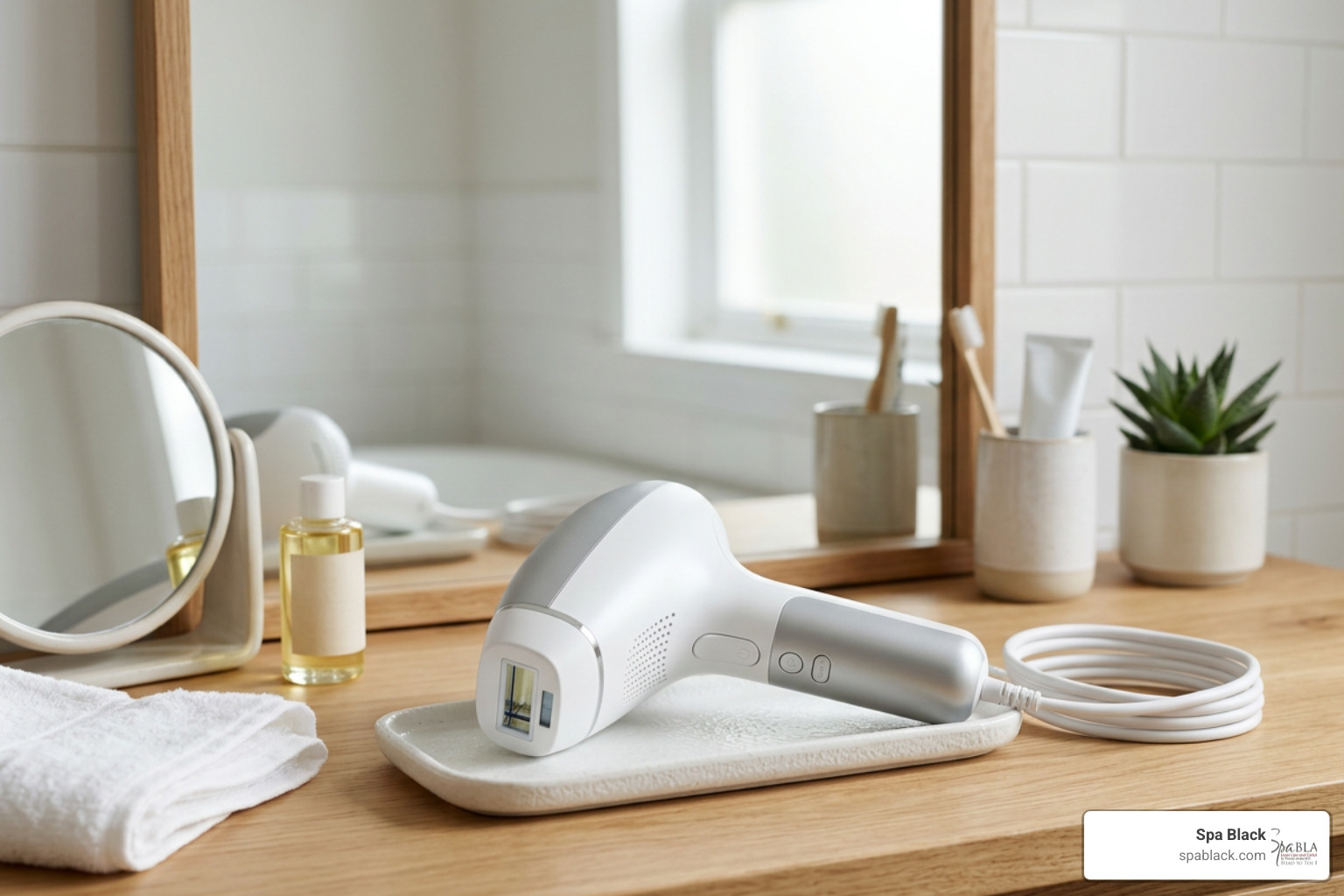
These devices represent a major step forward for those seeking long-term hair reduction. However, because they rely on targeting melanin (the pigment that gives hair and skin its color), they require careful handling to avoid skin damage. To learn more about the differences between home devices and clinical-grade systems, check out our Permanent Hair Removal San Antonio Guide.
High-Tech IPL and Laser Devices for Facial Hair Removal at Home
At-home IPL and laser devices work via selective photothermolysis. The device emits light energy that is absorbed by the melanin in the hair shaft. This light converts to heat, which travels down to the follicle and damages the cells responsible for hair growth.
Because these devices rely on melanin contrast, they are historically most effective on light to medium skin tones with dark hair. If the skin is dark, it contains high levels of melanin, meaning the device may target the skin surface instead of the hair root, risking burns or hyperpigmentation.
Here are two of the most popular, high-performing at-home IPL devices currently on the market in 2026:
- Braun Silk-expert Pro 5 IPL: This premium device is highly regarded for its built-in Skin iat sensor, which continuously reads your skin tone and automatically adapts the flash intensity for optimal safety and efficacy. It delivers visible results in as little as 2 weeks, offering a highly personalized experience for facial areas like the upper lip and chin.
- Ulike Sapphire Air 3 IPL: Known for its Sapphire Ice Cooling technology, this device maintains a comfortable, cool contact temperature of around 65 degrees Fahrenheit on the skin. This significantly reduces the snapping sensation often associated with IPL, making it an excellent, nearly painless option for sensitive facial skin.
When using these devices, consistency is key. We recommend treating the area three times a week for the first month, gradually tapering down to bi-weekly and monthly touch-ups as hair growth slows.
Electric Shavers and Trimmers
For those who prefer a completely painless, non-optical mechanical method, modern electric facial shavers are an excellent choice. Unlike traditional manual razors, electric trimmers use protective guards that prevent the blade from making direct contact with the skin surface, virtually eliminating the risk of cuts, razor burns, and irritation.
A standout product in this category is the Braun Series 7 Shaver. While engineered with advanced features like AutoSense technology – which reads hair density and adjusts the motor’s power automatically – it also features a 360-degree Flex Head that glides effortlessly along the jawline and chin.
While electric grooming tools are fantastic for daily maintenance, they only cut hair at the skin surface. For men looking for a more permanent solution to thick facial hair, stubble, or neck grooming, professional clinical treatments are often the most efficient route. You can read more about tailored male grooming treatments in our guide on Laser Hair Removal for Men San Antonio.
Traditional and Manual Methods for Quick Touch-Ups
Sometimes, you do not need high-tech electronics to get smooth skin. Traditional manual methods remain highly popular because they are affordable, travel-friendly, and provide immediate results.

Whether you want to sweep away fine peach fuzz or pull stubborn chin hairs from the root, manual grooming is a reliable choice for quick touch-ups.
Dermaplaning and Shaving
Dermaplaning is a specialized exfoliation method that involves using a single, sterile, surgical-grade blade held at a 45-degree angle to gently scrape away dead skin cells and vellus hair.
- The Skin Benefits: By removing the outer layer of dead skin and fine peach fuzz, dermaplaning instantly brightens the complexion, allows skincare products to penetrate deeper, and creates a perfectly smooth canvas for makeup application.
- The Risks: While highly effective, at-home dermaplaning carries a risk-to-reward ratio that requires caution. Using a dull blade or applying too much pressure can compromise your skin barrier, lead to microscopic tears, or trigger painful breakouts and razor bumps.
To keep your skin safe, always use a fresh, clean blade, hold your skin taut, and glide the tool in short, gentle downward strokes. If you are nervous about manual blades or are prone to post-shave irritation, you might wonder: Does Laser Hair Removal Hurt? Compared to the constant irritation of manual shaving, professional laser treatments offer a comfortable, long-term alternative that frees you from the cycle of daily blades.
Waxing, Sugaring, and Threading
For those who want weeks of smooth skin without daily upkeep, epilation—removing the hair from the root—is the way to go.
- Waxing: This method involves applying heated wax to the skin, which shrinks and grips the hair shaft, allowing it to be pulled out from the root. While waxing keeps skin smooth for 3 to 4 weeks, it can be harsh on delicate facial skin. We recommend choosing hard wax kits over soft wax, as hard wax adheres only to the hair rather than the skin, significantly reducing the risk of skin lifting or tearing.
- Sugaring: An ancient, natural alternative to waxing, sugaring uses a simple paste made of sugar, lemon juice, and water. The paste is applied against the direction of hair growth and flicked off in the natural direction of growth. Because sugar paste is water-soluble, it easily washes away with water if you make a mistake, and it is much gentler on sensitive skin.
- Threading: Originating in Central Asia and India, threading utilizes a doubled and twisted cotton thread rolled over areas of unwanted hair, plucking them out at the follicle level. It offers unmatched precision for eyebrows and the upper lip without exposing the skin to heat or chemicals.
While root-removal methods offer long-lasting results, they do come with trade-offs. Frequent waxing or epilating can cause micro-trauma, leading to redness, follicular swelling, or painful ingrown hairs if the hair breaks beneath the skin surface. If you are tired of the ongoing costs and discomfort of temporary waxing kits, you can explore our resources on Affordable Laser Hair Removal San Antonio to see how a permanent solution can fit into your long-term beauty budget.
Safety Precautions and Skin Aftercare
No matter which method of facial hair removal at home you choose, the way you prepare your skin and care for it afterward will determine whether you get a radiant glow or a breakout of red bumps.
Treating your skin with care before and after hair removal is essential for maintaining a healthy skin barrier. To understand the clinical standards of skin safety during energy-based treatments, refer to The Definitive Guide to Laser Hair Removal Procedure Details.
Pre-Treatment Preparation
A successful hair removal session starts the night before. Follow these steps to prepare your skin:
- Cleanse Thoroughly: Always start with a completely clean face. Use a gentle, fragrance-free cleanser to remove makeup, oil, and surface impurities that could get trapped in open follicles.
- Exfoliate Gently: Lightly exfoliating the night before helps remove dead skin cells, ensuring manual tools glide smoothly and reducing the risk of ingrown hairs.
- Perform a Patch Test: If you are using a new depilatory cream or wax kit, perform a patch test on a small, discreet area (like behind your ear or on your inner wrist) 24 hours before full application to check for allergic contact dermatitis.
- Check Your Medications: Avoid waxing, sugaring, or chemical depilatories if you are currently using prescription retinoids (like Tretinoin), oral acne medications (like Isotretinoin/Accutane), or active alpha-hydroxy acids (AHAs), as these products thin the skin and can cause severe skin lifting or chemical burns.
Post-Removal Aftercare
Once the hair is gone, your follicles are temporarily open and vulnerable to bacteria and irritation. Protect your skin with these essential aftercare steps:
- Soothe Immediately: Apply a generous layer of pure, fragrance-free aloe vera gel or a cold compress to calm immediate redness and reduce swelling.
- Avoid Active Ingredients: Keep retinoids, salicylic acid, glycolic acid, and heavily fragranced serums away from your face for at least 48 hours post-treatment.
- Hydrate and Protect: Apply a lightweight, non-comedogenic moisturizer to lock in hydration. Always follow up with a broad-spectrum SPF 30+ sunscreen, as freshly cleared skin is highly susceptible to UV-induced hyperpigmentation.
- Keep It Clean: Avoid heavy makeup, hot showers, intense workouts, and touching your face for 12 to 24 hours to prevent bacterial breakouts.
Frequently Asked Questions about Facial Hair Removal at Home
What is the safest method for facial hair removal at home?
For sensitive skin, the safest mechanical method is electric trimming or dermaplaning with a guarded blade, as these carry the lowest risk of skin tearing or chemical burns. If you are removing hair from the root, sugaring is safer than traditional waxing because the natural sugar paste does not adhere to live skin cells. Always consult a skin tone chart before using optical devices to avoid pigment damage.
Will shaving make my facial hair grow back thicker?
No. This is a common biological myth. Shaving or dermaplaning cuts the hair at the surface of the skin, leaving a blunt, flat edge as it regrows. This blunt tip can feel slightly stubbly or look darker initially, but it does not alter the actual structure, density, or growth rate of the hair follicle.
How do hormonal conditions like PCOS affect facial hair removal at home?
Hormonal imbalances, such as Polycystic Ovary Syndrome (PCOS), can lead to elevated androgen levels, causing a condition known as hirsutism (excessive, coarse hair growth in male-pattern areas like the chin and jawline).
While at-home methods like shaving or IPL can help manage the daily symptoms of PCOS-related hair growth, they are temporary solutions. Because the underlying cause is hormonal, the follicles will continue to produce hair rapidly. For those struggling with PCOS, professional medical-grade treatments offer the deep follicular targeting required for long-term management. To find out more about professional options, explore our local services at Laser Hair Removal San Antonio.
Conclusion
Managing your facial hair at home is highly convenient, but temporary home methods require constant, lifetime maintenance and carry ongoing risks of skin barrier damage, ingrown hairs, and irritation.
At Spa Black in San Antonio, Texas, we believe you deserve a more comfortable, long-term solution. Owned and led by renowned plastic surgeon Dr. Thomas Jeneby, our premier med spa offers state-of-the-art, comfortable professional hair removal treatments tailored to your unique skin type and hair density.
Instead of dealing with the endless cycle of waxing, shaving, and home devices, let our expert medical team provide you with the smooth, care-free skin you deserve. If you are ready to experience the ultimate in skin confidence, explore our professional solutions and book your personalized consultation on our Spa Black Laser Hair Removal Services page today.