


Introduction
When considering how many botox units for forehead lines you might need, it’s essential to understand the basics. This article will break down the common dosages and factors involved, providing you with a clear understanding to make informed choices.
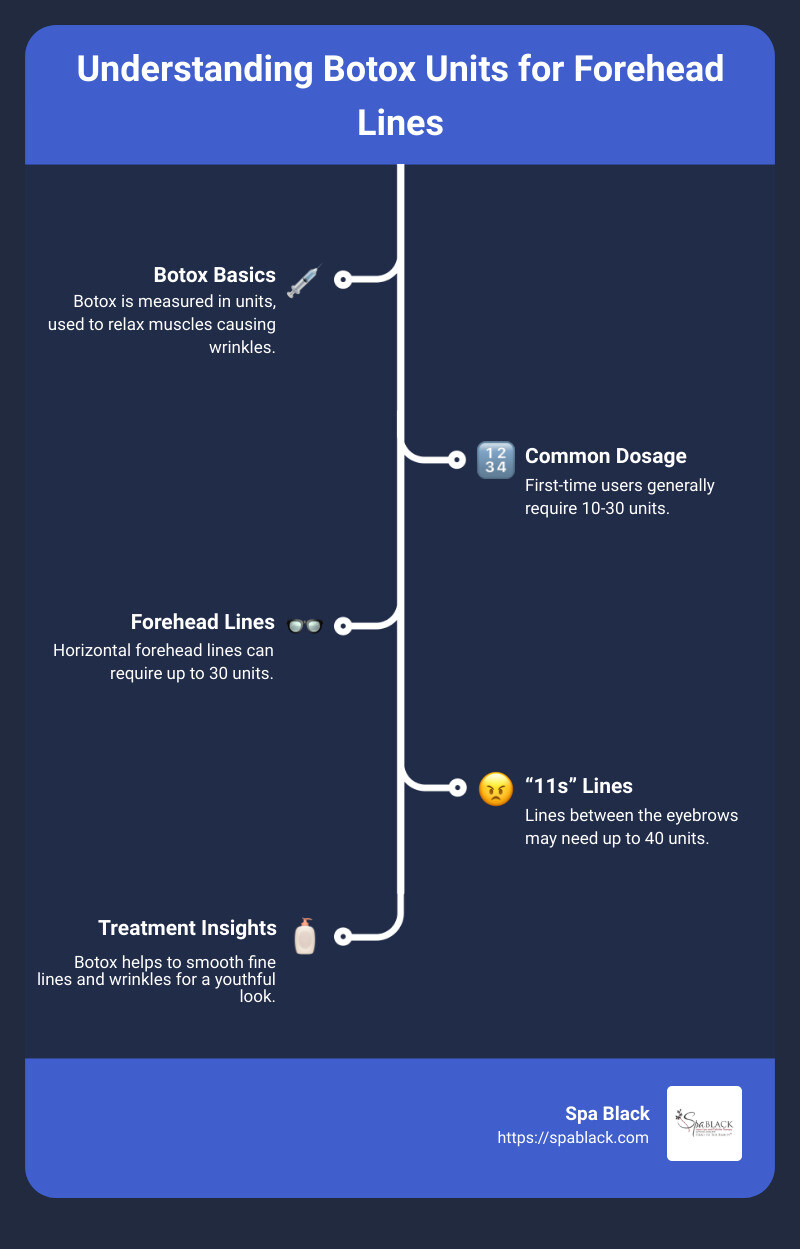
Measured in units, Botox is used to relax the muscles that cause wrinkles, leading to a smoother forehead. Here’s a quick glance at typical Botox units for forehead lines:
- First-time users: 10-30 units
- Horizontal forehead lines: up to 30 units
- “11s” between the eyebrows: up to 40 units
Botox injections have become a popular and effective way to manage the appearance of fine lines and wrinkles, especially on the forehead. The American Society of Plastic Surgeons reported roughly 4.5 million Botulinum Toxin Type A injections in 2020 alone. If you’re interested in treating forehead lines, knowing what to expect in terms of units can help you plan your treatment and budget.
Stay tuned for a deep dive into understanding Botox, the science behind it, and how tailored treatments can help you maintain a youthful look.

What is Botox?
Botox is a popular cosmetic treatment that has gained FDA approval for its effectiveness in reducing facial wrinkles. Derived from botulinum toxin type A, Botox works by temporarily paralyzing the muscles that cause wrinkles, giving your skin a smoother appearance.
FDA-Approval
The FDA approved Botox for cosmetic use back in 2002. It is specifically approved for treating forehead lines, glabellar lines (the “11s” between your eyebrows), and crow’s feet around the eyes. This approval assures you that Botox has been rigorously tested for safety and effectiveness.
Botulinum Toxin Type A
Botox is a highly purified form of botulinum toxin type A. This neurotoxin is produced by the bacterium Clostridium botulinum. While it might sound alarming, in controlled doses, this toxin can safely block nerve signals to your muscles, reducing their ability to contract and form wrinkles.
Cosmetic Treatment
Botox is particularly effective for treating “dynamic” wrinkles. These are the lines that appear when you make facial expressions like frowning, squinting, or raising your eyebrows. By injecting Botox into specific muscles, you can temporarily relax them, which smooths out the wrinkles and fine lines on your face.
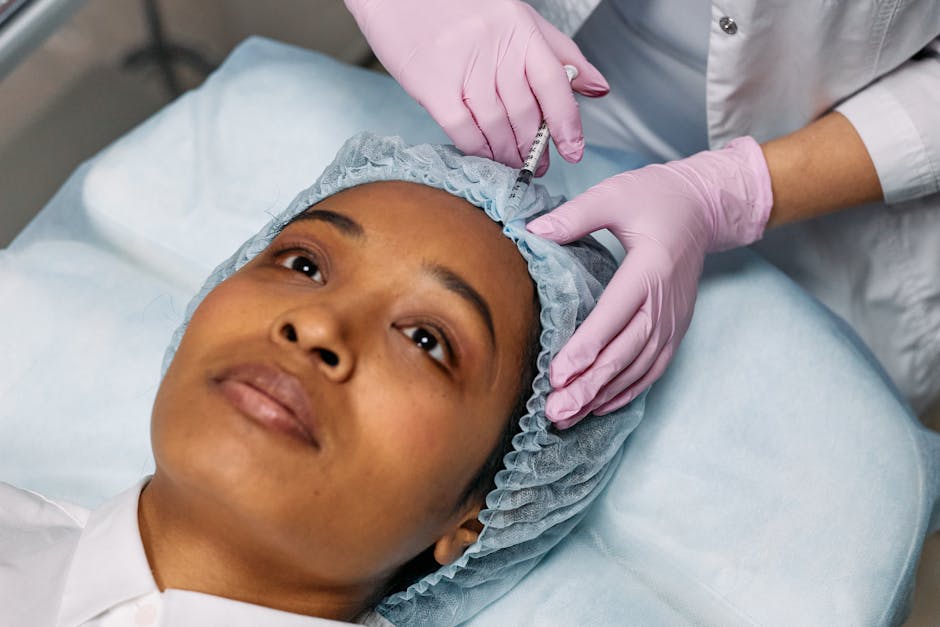
In 2020 alone, the American Society of Plastic Surgeons reported approximately 4.5 million Botulinum Toxin Type A injections, highlighting its popularity and effectiveness. Whether you’re dealing with deep forehead lines or just beginning to notice fine lines, Botox offers a customizable solution to help you achieve a more youthful appearance.
Stay tuned as we delve deeper into how to determine the right number of Botox units for your forehead lines and what factors influence this decision.
Determining the Right Amount of Botox Units for Forehead Lines
When it comes to treating forehead lines with Botox, the right number of units varies for each person. Let’s break down the key factors to consider: facial anatomy, muscle strength, and desired results.
Facial Anatomy
Understanding Your Muscles
The forehead is primarily controlled by the frontalis muscle, which raises your eyebrows. When this muscle contracts, it creates horizontal lines across your forehead. Each person’s facial anatomy is unique, affecting how many Botox units they might need.
For example, some people have a more prominent frontalis muscle, while others have a combination of smaller muscles that contribute to their forehead lines.
Muscle Strength
Thicker Skin, Stronger Muscles
The strength of your forehead muscles plays a crucial role in determining the number of units required. Stronger muscles, which are common in individuals with thicker skin, often need more Botox to achieve the desired effect.
A typical first-time Botox user might need between 10 and 30 units for their forehead. However, this range can vary significantly based on individual muscle strength.
Desired Results
Natural Look vs. Frozen Forehead
Your aesthetic goals also influence the number of Botox units needed. Some people prefer a subtle, natural look that allows for some movement, while others want a completely smooth, wrinkle-free forehead.
For a natural look, fewer units are typically used. Your injector might start with a lower dose and adjust as needed during follow-up visits. On the other hand, if you desire a more dramatic result, more units will be required to fully relax the muscles and eliminate lines.
Practical Example
A Real-World Scenario
Consider Jane, a 35-year-old with moderate forehead lines. She wants to reduce her wrinkles but still maintain some natural movement. Her injector might start with 20 units spread across five points on her forehead. After two weeks, Jane returns for a follow-up. If needed, her injector can add a few more units to fine-tune the results.
Expert Insight
Practitioner Expertise Matters
The skill and experience of your Botox injector are vital. A knowledgeable practitioner will assess your facial anatomy, muscle strength, and desired results to tailor the treatment to your needs. They’ll ensure that the Botox is evenly distributed, avoiding a “frozen” look and maintaining a natural appearance.
Key Takeaway
Determining the right number of Botox units for forehead lines involves understanding your facial anatomy, assessing muscle strength, and clearly defining your desired results. Consulting with an experienced injector can help you achieve the best outcome.
Average Botox Units Required for Forehead Lines
When considering how many Botox units for forehead lines are needed, the average range typically falls between 10 to 30 units. This is a general guideline, but several factors can influence the exact number of units required.
Individual Variability
Everyone’s face is unique. The number of units you need for effective treatment may differ from someone else. Factors like muscle strength, skin type, and the depth of your wrinkles play significant roles.
For example:
- Stronger muscles: If your forehead muscles are particularly strong, you might need closer to 30 units.
- Weaker muscles: Those with less muscle activity might find that 10 units suffice.
Practitioner Expertise
The skill and experience of your injector are crucial. A knowledgeable practitioner can tailor the treatment to your needs, ensuring optimal results without overdoing it.
Our approach at Spa Black involves:
- Precision: Injecting no more than a finger’s width above the eyebrow to avoid side effects like drooping eyelids.
- Technique: Using a method that mimics the directional flow of the muscles, allowing for safer and more effective injections.
Real-Life Examples
- Case Study: One patient with moderate forehead lines received 20 units and reported smoother skin without a “frozen” look. Another patient with deeper lines required 30 units for similar results.
Key Points to Remember
- Consultation is key: Always consult with a trained professional to determine the right number of units for your specific needs.
- Regular treatments: Over time, regular Botox treatments can lead to longer-lasting results, potentially reducing the number of units needed in the future.
Understanding these factors can help you set realistic expectations and achieve the best possible outcome for your Botox treatment.
Next, we’ll delve into the factors that influence the number of Botox units required for forehead lines, including age, skin type, and previous treatments.
Factors Influencing Botox Units for Forehead Lines
When it comes to determining how many Botox units are needed for forehead lines, several factors come into play. Understanding these can help tailor a treatment plan that meets your specific needs and expectations.
Age
Age is a significant factor. Older individuals often have deeper, more established wrinkles, which typically require more units to achieve the desired effect. For younger individuals seeking preventative care, fewer units may be sufficient.
Skin Type
Your skin type also matters. Thicker skin may require more units compared to thinner skin. This is because thicker skin can be more resistant to the effects of Botox, necessitating a higher dosage to see noticeable results.
Previous Treatments
If you’ve had Botox or other neurotoxin treatments before, your injector will consider how your facial muscles responded to previous treatments. This history can help in fine-tuning the number of units needed for your current treatment. For instance, if you’ve noticed that previous treatments wore off quickly, you might need more units this time.
Muscle Activity
The activity level of your facial muscles is another crucial factor. People with highly dynamic facial expressions might require more units to effectively reduce forehead lines. Conversely, if your facial muscles are less active, fewer units may be needed.
By understanding these factors, you can better prepare for your consultation and treatment, ensuring you get the most out of your Botox experience.
Next, we’ll address some frequently asked questions about Botox units for forehead lines.
Frequently Asked Questions about Botox Units for Forehead Lines
Is 20 units of Botox enough for forehead lines?
The answer varies. 20 units is a common starting point and often recommended for treating horizontal forehead lines. However, the actual number of units needed can differ based on your muscle strength, the severity of your lines, and your desired look. Some individuals may need fewer units for a subtle effect, while others might require more for a smoother, more dramatic result.
Can I get Botox only for my forehead lines without affecting other areas?
Yes, you can. If you’re focused solely on forehead lines, your practitioner can tailor the treatment specifically for that area. However, it’s worth noting that treating only the forehead may sometimes lead to imbalanced facial expressions.
Many practitioners suggest also treating the glabella (the area between your eyebrows known as the 11s) to maintain a natural look. This combined approach helps in achieving a balanced and harmonious appearance.
How often should I get Botox treatments for forehead lines?
Botox results typically last about 3 to 4 months. To maintain a smooth forehead, touch-ups are recommended at these intervals. Regular treatments can offer longer-lasting results over time as the facial muscles may weaken and contract less frequently.
Your practitioner will usually set up follow-up appointments to monitor your progress and adjust the treatment plan as needed. This ensures you achieve the best and most natural-looking results.
Conclusion
When it comes to treating forehead lines with Botox, a personalized approach is key. No two faces are the same, and the number of units required can vary widely based on individual factors such as age, skin type, and muscle strength. At Spa Black, we prioritize customized treatment plans to ensure you get the best results tailored to your unique needs.
Our experienced practitioners take the time to understand your goals and assess your facial anatomy. This thorough evaluation helps us determine the optimal number of Botox units for your forehead lines, ensuring effective and natural-looking results.
Why Choose Spa Black?
At Spa Black, we are committed to delivering high-quality care with safety as our top priority. Our team of skilled injectors is well-versed in facial anatomy and the latest Botox techniques. We strive to provide a comfortable and professional environment where you can feel confident in your treatment plan.
Schedule Your Consultation Today
Ready to smooth out those forehead lines? Click here to schedule a consultation with one of our expert practitioners at Spa Black. Let’s create a personalized Botox treatment plan that helps you achieve a youthful, refreshed look.
We can’t wait to meet you and help you on your journey to smoother, more youthful skin!