


What to Expect at a Laser Hair Removal Consultation
A laser hair removal consultation is your first step toward long-lasting hair reduction — and it’s more important than most people realize.
Here’s a quick overview of what it covers:
- Your goals — which areas you want treated and what results you’re hoping for
- Your medical history — current medications, allergies, skin conditions, and lifestyle factors
- Skin and hair assessment — your provider evaluates your skin tone, hair color, and hair thickness to confirm candidacy
- Treatment plan — a personalized session schedule based on your hair growth cycle and target areas
- Risks and expectations — an honest conversation about what laser can (and can’t) do for you
- Pricing and next steps — cost breakdown, package options, and how to prepare for your first session
Most consultations are free, take 30–60 minutes, and require no commitment. They exist to protect you — ensuring the treatment is safe and effective for your specific skin and hair type before any laser touches your skin.
I’m Dr. Thomas Jeneby, a board-certified plastic surgeon with over two decades of experience helping patients in San Antonio achieve their aesthetic goals, including guiding them through the laser hair removal consultation process to ensure safe, personalized, and effective treatment plans. In the sections below, I’ll walk you through everything you need to know — from what happens at your consultation to how many sessions you’ll likely need and what results you can realistically expect.
Explore more about laser hair removal consultation:

What Happens During a Laser Hair Removal Consultation?
A good consultation is not just a quick peek at the treatment area and a price quote. It should be a real evaluation.
At Spa Black, we use the consultation to determine whether laser hair removal is appropriate for you, which areas can be treated safely, and what kind of results are realistic based on your skin tone, hair color, hair thickness, and medical history.
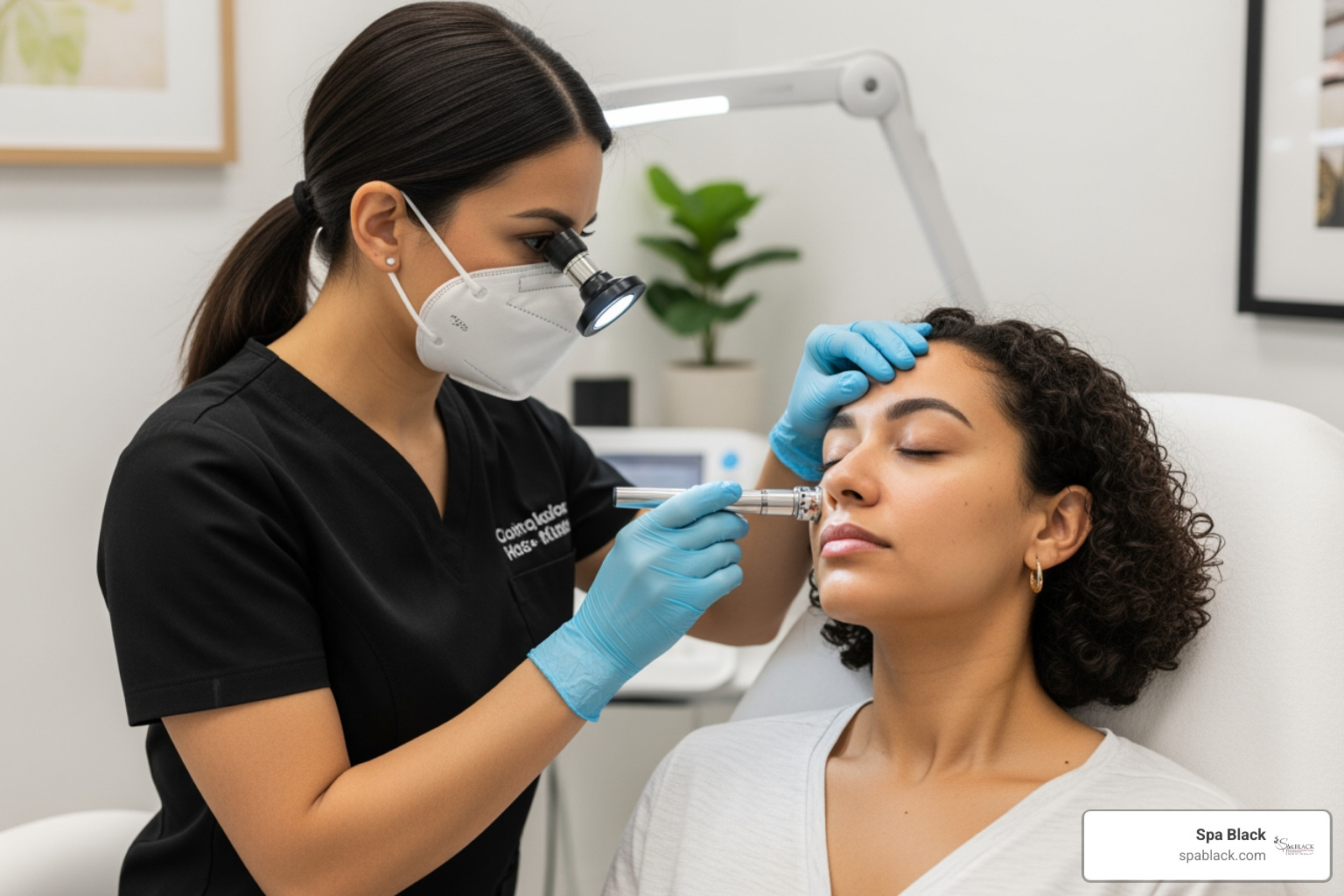
During a consultation, we typically review:
- Your treatment goals
- The areas you want treated
- Your skin tone and recent sun exposure
- Your hair color, density, and texture
- Your medical history and medications
- Any history of scarring, pigment changes, herpes outbreaks, or skin sensitivity
- Whether a patch test is appropriate
- Estimated session timing, spacing, and cost
- Risks, side effects, and aftercare
- Consent and next steps
Some clinics also take baseline photographs. This is common and helpful because progress with laser hair removal happens gradually, not overnight.
Step-by-Step Overview of a Laser Hair Removal Consultation
Here is what the appointment usually looks like from start to finish:
Check-in and paperwork
You may complete forms about your health history, medications, allergies, and previous cosmetic treatments.Discussion of your goals
We talk about which areas bother you most, whether your goal is less shaving, fewer ingrown hairs, smoother skin, or major reduction over time.Skin and hair assessment
Laser works by targeting pigment in the hair follicle, so skin tone and hair color matter. Darker, coarser hair usually responds best. Very light blonde, white, gray, and many red hairs are often poor candidates because there is not enough pigment for the laser to target effectively.Review of contraindications
We check for issues that may require delaying treatment, such as pregnancy, active infection, open wounds, recent tanning, certain medications, or a recent history of isotretinoin use.Discussion of treatment plan
Most people need multiple sessions because only about 30% to 50% of hair is actively growing at any given time. We explain the likely number of treatments, spacing, and whether maintenance may be needed later.Photography and documentation
Photos may be taken to document the starting point and support treatment planning.Comfort and anxiety discussion
If you’re nervous, say so. That’s normal. A consultation is exactly the place to ask questions about discomfort, downtime, modesty, and how the treatment feels.
What Information to Bring to Your Laser Hair Removal Consultation
Coming prepared makes the consultation much more useful. Bring or be ready to discuss:
- A list of current medications
- Vitamins, herbs, and supplements
- Drug or product allergies
- Pregnancy or breastfeeding status
- Skin conditions such as eczema, psoriasis, melasma, or frequent irritation
- History of cold sores or herpes if the face or bikini area may be treated
- Any hormone-related conditions such as PCOS
- Your recent tanning history, including self-tanner
- Your usual hair removal methods: shaving, waxing, plucking, threading, epilating
- Prior laser or IPL treatments
- Your budget and scheduling preferences
If you have questions about timing, our guides on laser hair removal what to expect and laser hair removal tips san antonio can help you prepare.
Questions to Ask at Your Laser Hair Removal Consultation
A consultation should go both ways. We evaluate you, and you evaluate us.
Bring questions. Seriously. The best patients are informed patients.
Important questions to ask include:
- What type of laser do you use?
- Is this laser appropriate for my skin tone and hair type?
- Will my treatments be customized each visit?
- Do you use a cooling system for comfort and skin protection?
- Who performs the treatments?
- What training and supervision do they have?
- How many sessions do you expect I will need?
- How far apart will sessions be scheduled?
- What results are realistic for my hair color and treatment area?
- What side effects are most common?
- How do you handle irritation, burns, or pigment changes if they occur?
- Are maintenance sessions likely?
- What is the total estimated cost?
- Are package pricing or financing options available?
What to Ask About Technology During Your Laser Hair Removal Consultation
Not all lasers are the same, and this matters a lot.
Different devices are often better suited for different skin tones and hair types. In general:
- Alexandrite lasers are often used for lighter skin tones
- Nd:YAG lasers are commonly preferred for darker skin tones
- Diode lasers are also widely used and can be effective across a range of skin types depending on the system and settings
Ask your provider:
- Which laser platform will be used for me?
- How do you determine this based on my skin type?
- Do you assess Fitzpatrick skin type?
- How do you reduce the risk of burns or discoloration?
- Will settings be adjusted as my hair gets finer during treatment?
- Does this technology work well for coarse hair? Fine hair?
- Will it work on my facial hair?
- Is there a cooling feature to improve comfort?
It is also worth asking what the treatment will not work on. Honest providers should tell you clearly that white, gray, and many blonde or red hairs do not respond well to laser treatment. For broad medical background on preparation and safety, see the Mayo Clinic’s laser hair removal overview.
Who Will Perform Your Treatments and What Qualifications Matter?
This is one of the most important parts of your consultation.
Laser hair removal is a medical aesthetic treatment. It is not something that should be handled casually. You want a qualified provider with real training, clear safety protocols, and medical oversight.
Look for:
- A board-certified physician involved in care planning or supervision
- Licensed medical professionals or properly trained laser staff
- Experience treating a wide range of skin tones
- Knowledge of how to adjust settings safely
- A clear plan for complications and follow-up
According to medical guidance, consultation should include a health review, discussion of risks, and treatment planning. You can read more about those expectations from the American Society of Plastic Surgeons.
At Spa Black, our patients benefit from care in a med spa owned by a plastic surgeon, which adds an extra layer of medical oversight and personalized planning.
Candidacy, Treatment Areas, and How Many Sessions You May Need
Laser hair removal can be a great option, but not every patient and not every hair type is the same.
The best candidates usually have:
- Darker hair with enough pigment for the laser to target
- Skin that is not actively tanned or sunburned
- Realistic expectations about gradual reduction
- Willingness to complete a full treatment series
Hormonal conditions can also affect results. If you have PCOS or hormonally driven facial hair, laser can still help, but you may need more sessions or occasional maintenance because the treatment does not fix the hormonal cause.
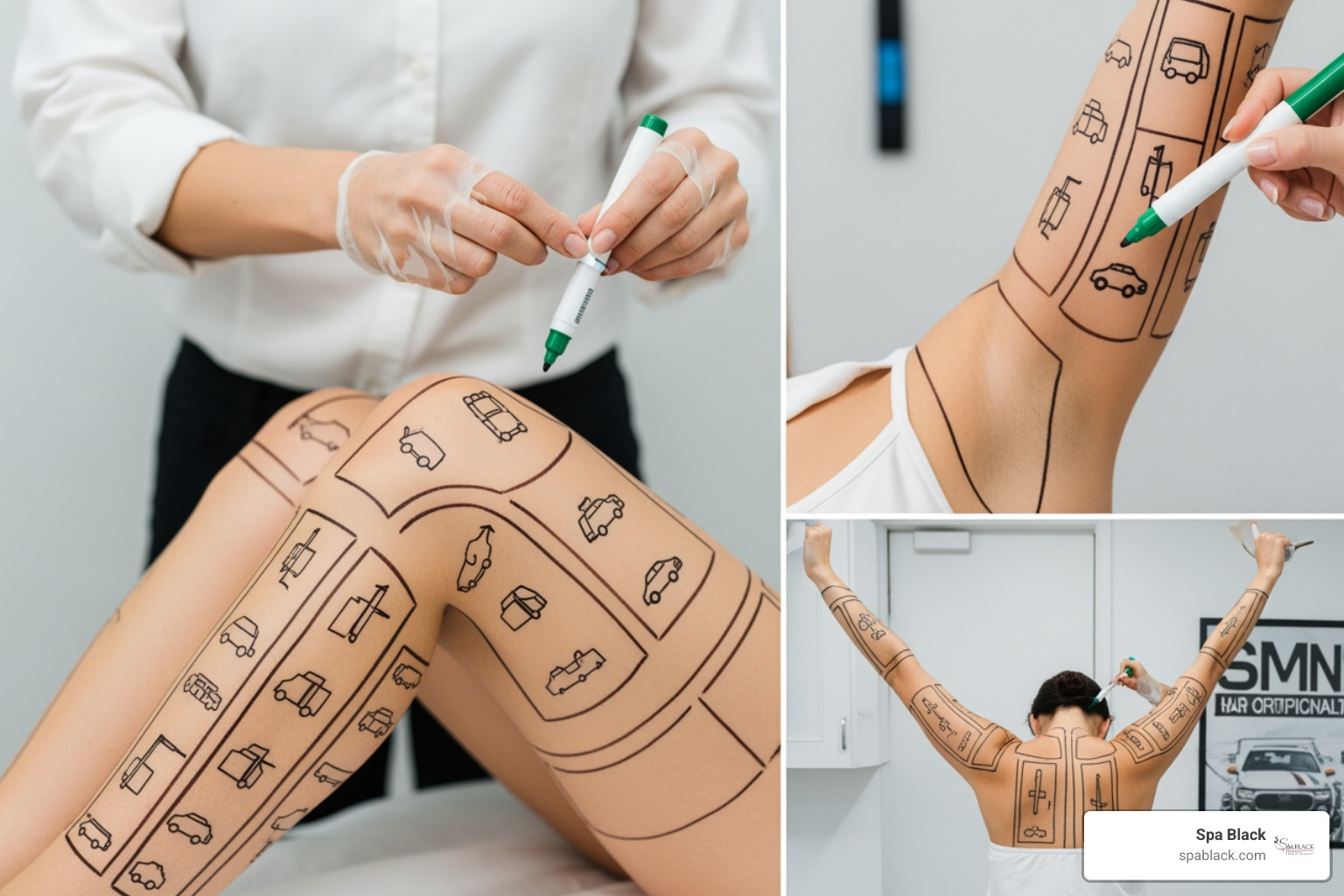
Which Areas Can Be Treated and Which Should Be Avoided?
Laser hair removal can be used on many body areas, including:
- Upper lip
- Chin
- Cheeks
- Underarms
- Arms
- Legs
- Bikini line
- Brazilian area
- Abdomen
- Chest
- Back
- Shoulders
Popular service pages to explore:
- laser hair removal san antonio
- full body laser hair removal san antonio
- brazilian laser hair removal san antonio
Areas typically avoided or treated with major caution include:
- Eyelids
- Eyebrows or very close to the eye
- Tattooed skin
- Skin with open wounds, infection, or active irritation
Those restrictions are important. Medical sources specifically caution against treating the eyelids, eyebrows, and tattooed areas because of higher risk of injury.
How Many Sessions Will You Need and Why?
This is the question almost everyone asks first.
The short answer: more than one. Usually several.
Why? Because laser only works well on hairs in the active growth phase, called anagen. Since only about 30% to 50% of hairs are actively growing at one time, multiple sessions are necessary to catch different follicles at the right stage.
Common treatment ranges from the research include:
- Most people need 4 to 8 treatments
- Many experts recommend at least 6 sessions
- Many clients need 6 to 8 sessions spaced 4 to 6 weeks apart
- Average treatment plans for 70% to 90% long-term reduction may be closer to 8 to 12 sessions
A simple guide:
| Area | Typical session range | Common spacing |
|---|---|---|
| Upper lip or chin | 6-10 | 4-6 weeks |
| Underarms | 6-8 | 4-6 weeks |
| Bikini or Brazilian | 6-8 | 4-6 weeks |
| Legs | 6-8 | 6-8 weeks |
| Back or chest | 8-12 | 6-8 weeks |
After the first treatment, many people see about a 10% to 25% reduction in visible hair growth. That sounds modest, but it is normal. Laser is a process, not a magic wand with perfect aim on day one.
Learn more here:
What Results Can You Realistically Expect?
Realistic expectations lead to happier patients.
Laser hair removal usually delivers long-term hair reduction, not 100% guaranteed forever hair disappearance. Many patients achieve roughly 70% to 90% reduction after a full series, but results vary based on:
- Hair color
- Hair thickness
- Skin tone
- Hormones
- Treatment area
- Consistency with appointments
- Laser technology used
You should also know:
- Hair does not fall out instantly; shedding often happens over days to weeks
- Regrowth, if it happens, is often finer and lighter
- Facial and hormonally influenced areas may need more maintenance
- Occasional touch-ups are common
For a deeper look, visit is laser hair removal permanent.
How to Prepare Before the Consultation and First Treatment
Preparation matters. A lot.
The better prepared your skin is, the safer and more effective treatment tends to be.
Pre-Consultation Checklist
Before your consultation, it helps to gather:
- A list of questions
- A list of medications and supplements
- Notes on your treatment goals
- Information about recent cosmetic procedures
- Your recent tanning or sun exposure history
- Any history of reactions to waxing, shaving, or previous laser
- Your calendar, so you can discuss scheduling around vacations or events
What to bring:
- Photo ID
- Medication list
- Allergy information
- Details on skin conditions
- Prior treatment history
- Budget questions
- Photos of problem areas if the hair pattern changes or flares unpredictably
How to Prep for Your First Laser Session
Once you’re cleared for treatment, common preparation steps include:
- Avoid waxing, plucking, sugaring, or epilating for about 4 weeks before treatment
- Shave the area the day before or as directed
- Do not bleach the hair
- Avoid excessive sun exposure and tanning beds
- Use SPF 30+ on exposed areas
- Arrive with clean skin
- Skip makeup, lotion, oil, fragrance, deodorant, and self-tanner on the treatment area
- Wear loose clothing if a sensitive area will be treated
Why no waxing or plucking? Because the laser targets the hair follicle. If you remove the hair from the root, there is less for the laser to target. Shaving is usually fine because it leaves the follicle in place.
More prep help:
When You May Need to Delay or Avoid Treatment
Sometimes the safest answer is “not yet.”
You may need to postpone or avoid laser hair removal if you are:
- Pregnant
- Recently tanned or sunburned
- Using certain photosensitizing medications
- Recovering from an active skin infection
- Dealing with open cuts, wounds, or severe irritation in the area
- Having an active herpes flare in a treatment zone
- Prone to problematic scarring or keloids
- Recently treated with isotretinoin, depending on timing and provider guidance
- Seeking treatment over suspicious skin lesions or certain skin cancer history areas without medical clearance
Helpful reading:
Risks, Side Effects, Aftercare, and Cost
Laser hair removal is generally well tolerated when performed by trained professionals, but no cosmetic treatment is risk-free.
Common temporary effects include:
- Redness
- Mild swelling around follicles
- Warmth or tenderness
- Temporary sensitivity
Less common but more serious risks can include:
- Hyperpigmentation or hypopigmentation
- Burns
- Blistering
- Crusting
- Scarring
- Paradoxical hair growth in rare cases
Potential Risks and How Qualified Providers Manage Them
Risk management starts at the consultation.
Qualified providers reduce problems by:
- Reviewing your skin type and medical history carefully
- Choosing the right laser for your skin tone
- Using conservative settings when appropriate
- Performing patch tests when needed
- Using cooling methods during treatment
- Giving detailed pre- and post-care instructions
- Monitoring your skin response over time
Darker skin tones deserve special attention because pigment changes and burns are more likely when the wrong laser or settings are used. That is why provider experience matters so much.
For a medically reviewed overview of how laser hair removal works and what side effects to expect, see Cleveland Clinic’s guide.
What Aftercare Is Required After Treatment?
Aftercare is usually simple, but it matters.
Most patients are advised to:
- Use a cool compress if the area feels warm
- Wash gently with a mild cleanser
- Avoid hot tubs, saunas, and intense workouts for 24 to 48 hours
- Avoid picking, scratching, or aggressive exfoliation
- Wear sunscreen daily on treated exposed skin
- Avoid direct sun exposure as much as possible
- Expect some hairs to shed over the next 1 to 3 weeks
If the area looks mildly pink, that is usually normal. Think “light sun-kissed” rather than “something has gone terribly wrong.” If you experience blistering, severe pain, or unusual swelling, contact your provider promptly.
How Much Does Laser Hair Removal Cost?
Cost depends on several factors:
- Size of the treatment area
- Number of areas treated
- Number of sessions needed
- Whether you purchase individual sessions or a package
- Technology used
- Provider qualifications and level of oversight
Small areas like the upper lip or chin usually cost less per session than large areas like full legs, back, or full body plans. Many clinics offer package pricing because laser works best as a series.
Questions to ask about cost:
- Is the consultation free?
- What is the per-session price?
- Is there package pricing?
- Are touch-ups included?
- Are financing or payment plans available?
For local pricing guidance, visit:
Over time, many patients find the value makes sense compared with years of waxing appointments, razors, ingrown hairs, and emergency shaving before beach weekends.
How to Choose the Right Clinic After Your Consultation
The best consultation should leave you informed, not pressured.
You want a clinic that offers:
- A personalized plan
- Transparent pricing
- Honest expectations
- Strong safety standards
- Experience with different skin tones
- Clear aftercare guidance
- Professional, respectful communication
If you’re in San Antonio, it also helps to choose a provider with a strong medical foundation and experience in aesthetic treatment planning.
Red Flags to Watch For
Be cautious if a clinic:
- Promises the same plan for everyone
- Cannot explain the laser technology
- Does not ask about your medications or medical history
- Rushes through risks or side effects
- Guarantees total permanence
- Claims to treat white, gray, or blonde hair just as well as dark hair
- Has no visible medical oversight
- Cannot explain what happens if a reaction occurs
A rushed consult is not a sign of efficiency. It is usually a sign to keep looking.
Signs You’ve Found a Qualified Provider
Good signs include:
- They match the laser approach to your skin type
- They explain realistic outcomes clearly
- They provide written pre-care and aftercare
- They discuss session spacing and maintenance
- They are honest if you are not an ideal candidate
- They are experienced treating darker skin tones safely
You can also explore:
Frequently Asked Questions About Laser Hair Removal Consultation
Can I get treated the same day as my consultation?
Sometimes, yes, but it depends.
Same-day treatment may be possible if:
- You’re a good candidate
- The area is properly shaved if required
- You have not had recent sun exposure
- Your medical history raises no safety concerns
- A patch test is not needed first
If you’ve been tanning, are using certain medications, or need more evaluation, it may be safer to schedule treatment for another day.
Does laser hair removal work for men and facial hair?
Yes, laser hair removal can work very well for men and for many facial areas.
Common areas for men include:
- Back
- Chest
- Shoulders
- Neck
- Beard line
Facial hair in both men and women can often be treated, but hormonally influenced areas such as the chin and upper lip may need more maintenance over time.
Learn more:
- laser hair removal for men
- laser facial hair removal san antonio
- laser hair removal for men san antonio
Is laser hair removal safe for darker skin tones?
Yes, it can be safe for darker skin tones when the provider uses appropriate technology and settings.
This is where experience matters. Devices such as Nd:YAG are often preferred for darker skin because they can better target the follicle while reducing the risk of surface skin injury when used correctly. The consultation is where we determine the safest plan for your skin.
Conclusion
A laser hair removal consultation should give you clarity, not confusion. By the end of it, you should understand whether you’re a good candidate, what technology makes sense for your skin and hair type, how many sessions you may need, what it may cost, and what results are realistic.
At Spa Black in San Antonio, we believe the consultation is where safe, customized care begins. If you’re thinking about starting treatment, taking this first step can help you avoid wasted time, wasted money, and plenty of unnecessary razor drama.
For a broader overview, start here: