


You've booked your first laser hair removal appointment, then noticed a fresh tan, longer-than-usual stubble, or a skincare product you're not sure you should use. That situation is common, and it doesn't mean you've ruined your treatment. Most preparation mistakes happen because the timeline isn't clear, not because patients are careless.
Good laser hair removal prep protects the follicle as a treatment target while helping reduce unnecessary heat and pigment-related irritation. The right plan also gives your clinician useful information before treatment begins. Use the countdown below as a practical framework, then follow your provider's specific protocol if it differs.
Table of Contents
- Why Laser Hair Removal Prep Matters More Than People Think
- How Laser Hair Removal Works on the Follicle
- The 4 to 6 Week Prep Window Step by Step
- The Final 24 Hours Before You Walk In
- Medications and Health Details to Disclose Upfront
- Questions Worth Asking at Your Consultation
Why Laser Hair Removal Prep Matters More Than People Think
A patient arrives for treatment with a fresh tan, longer-than-usual hair, or skin covered in lotion. The appointment may need to be postponed, the settings reduced, or the treatment adjusted. These outcomes are frustrating, but they usually reflect preparation and timing rather than a problem with the device or treatment plan.
Preparation protects three practical targets: follicle access, skin comfort, and pigment safety. Use the countdown below to see what matters at each stage, then follow your provider's instructions if they differ.
Four to six weeks before treatment
Stop waxing, plucking, threading, or electrolysis at least 4 weeks before treatment. These methods remove hair from the follicle, leaving the laser with less of the structure it needs to target. The Mayo Clinic's laser hair removal guidance explains why shaving is generally preferred: it cuts hair at the surface while leaving the follicle in place.
This window also gives recently irritated skin time to settle. If you have a planned holiday, regular tanning, or a new product that could affect your skin, mention it to the clinic before booking or rescheduling.
One week before treatment
Avoid intentional tanning and self-tanner on the area being treated. A fresh tan adds competing pigment to the skin, which can increase irritation risk and may require more conservative settings. Long surface hair can also absorb energy before it reaches the follicle, so follow the clinic's shaving instructions rather than arriving with visible length.
On the day
Arrive with clean skin unless your provider gives different instructions. Lotion, oils, deodorant, or other residue can affect how the skin is assessed and prepared. Tell the clinician about recent sun exposure, skin reactions, and products or medications that may change sensitivity.
Practical rule: If you are unsure whether something counts as tanning, exfoliation, hair removal, or medication exposure, contact the clinic before arriving. A short call is easier than losing an appointment.
Preparation supports realistic results
Laser hair removal should be discussed as long-term hair reduction, not guaranteed eradication. A systematic review reported long-term reductions of roughly 30–74% with Nd:YAG, 35–84% with alexandrite, and 33–69% with diode systems, with no clear overall superiority of one technology. The systematic review of laser hair removal outcomes also found that outcomes tended to be better on sites with longer growth cycles.
Results vary with hair, skin, body site, treatment settings, and timing. Proper shaving, sun avoidance, clear medication disclosure, and sensible spacing help your clinician assess the skin and hair accurately. Spa Black's guide to laser hair removal effectiveness explains other factors that influence outcomes.
How Laser Hair Removal Works on the Follicle
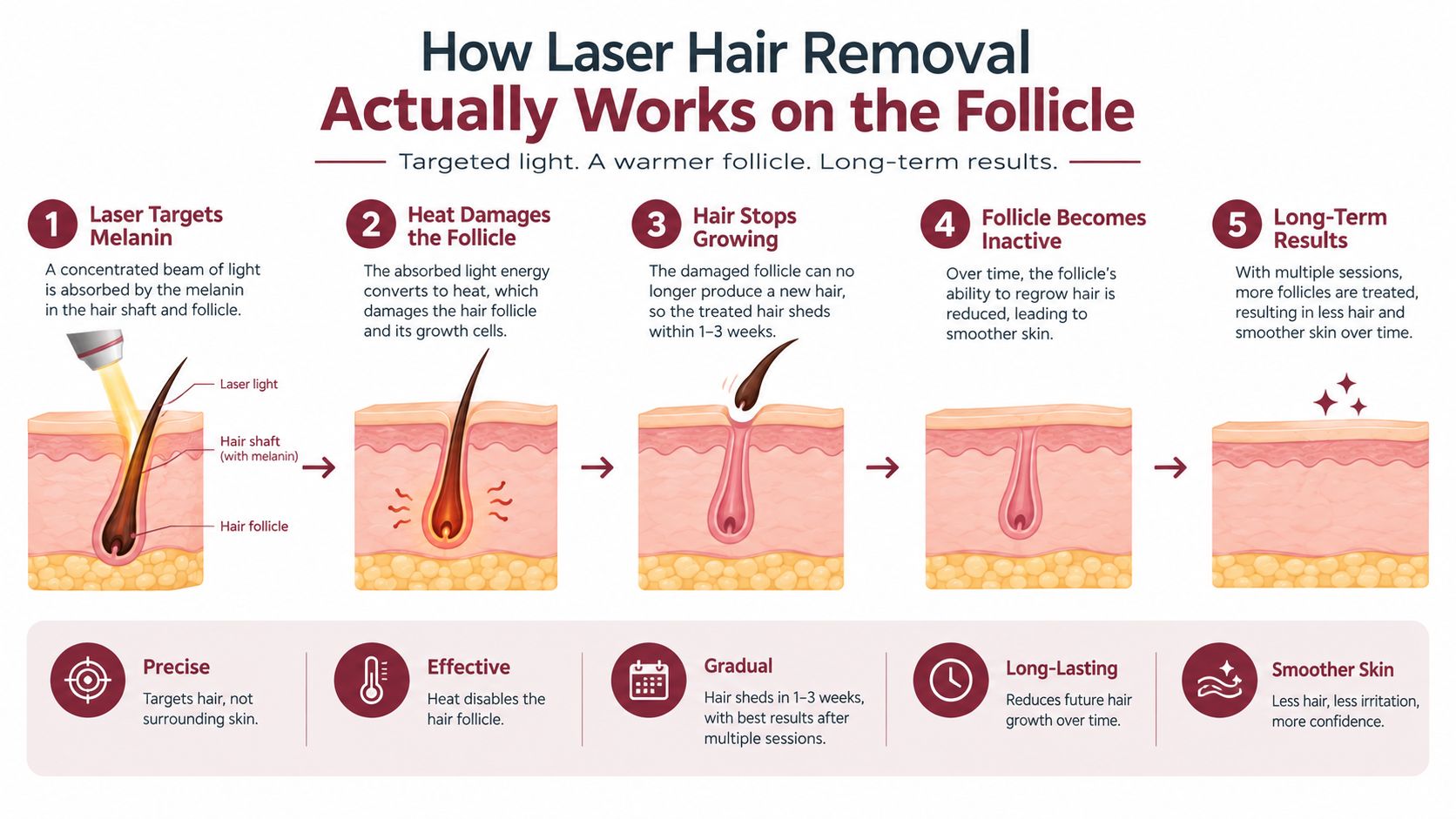
Laser hair removal uses concentrated light that is absorbed by pigment in the hair. The energy travels down the shaft toward the follicle, where heat damages the structures responsible for future growth. The treatment works best when the follicle contains actively growing, pigmented hair, known as the anagen phase.
Not every follicle is in that phase at the same time. Facial hair, underarm hair, bikini-area hair, arm hair, and leg hair each follow their own growth patterns, and cycle lengths differ noticeably by body site. As noted earlier, outcomes tend to be better on sites with longer growth cycles. This is one reason treatment intervals should be based on visible regrowth and body site rather than a rigid calendar.
Why shaving works better than waxing
Shaving removes only the visible portion of the hair. The follicle stays beneath the skin, so the laser still has a pigmented structure to target. Waxing, plucking, threading, and electrolysis pull hair out from the root, which can leave the laser with little or no intended target at the next session.
This is the central reason root-removing methods are paused well before treatment. Clinics differ on the exact interval, and the required gap can vary by protocol, body area, hair cycle, and device. The principle stays the same: shaving preserves the target, while epilation removes it.
Why tanning changes the safety calculation
Laser energy does not interact only with hair. Recently tanned skin contains more competing pigment, which absorbs additional heat. That raises the risk of burns or post-inflammatory pigment changes and may limit the settings your clinician can safely use.
Sun avoidance is therefore a safety measure, not merely a cosmetic preference. A visible tan may lead a clinician to postpone treatment or adjust the plan. Preparation also means telling the clinic about recent tanning, indoor tanning, sunless tanners, or unusually high sun exposure, even when the skin shows no burn.
The 4 to 6 Week Prep Window Step by Step
The best timeline depends on the area being treated, your recent sun exposure, your hair-removal habits, and the device protocol. Use the schedule below as a planning framework, not as permission to override your clinician.
Six weeks out
If you wax, tweeze, thread, sugar, epilate, or use electrolysis on the treatment area, stop and confirm the clinic's required interval. StatPearls describes 6 weeks without plucking or waxing, while the Mayo Clinic recommends at least 4 weeks. The American Board of Laser Surgery also advises avoiding depilatories, waxing, plucking, and electrolysis for at least 6 weeks in treated areas. Its laser hair removal preparation guidance allows shaving and recommends arriving with a clean shave.
Don't switch from waxing to a depilatory cream without asking first. Depilatories don't remove the follicle in the same way, but they can irritate the skin and may not fit your provider's protocol. During a treatment series, shaving is typically the preferred method.
Four weeks out
Start treating sun avoidance as part of the appointment plan. Avoid outdoor and indoor tanning, and stop self-tanner on the areas that may be treated. The American Academy of Dermatology recommends avoiding tanning and using a broad-spectrum, water-resistant SPF 30 or higher every day before going outdoors. The AAD's preparation guidance also emphasizes that your clinician should know about recent tanning.
Mayo Clinic guidance recommends protecting treated areas from the sun for 6 weeks afterward, or for the period your clinician specifies. StatPearls describes sunscreen use for 4–6 weeks before treatment, particularly on exposed areas. These are examples of clinical timeframes, not universal prescriptions. Your provider may extend them if you have a tan or a higher risk of pigment changes.
Two weeks out
Keep the treatment area calm and avoid creating new irritation. Don't schedule unnecessary exfoliation, aggressive body treatments, or other procedures over the same skin without checking with the clinic. If you've recently had substantial sun exposure, contact the provider rather than assuming the appointment can continue.
This is also a useful point to confirm your shaving instructions. Some clinics prefer the area shaved the day before, while others may ask for shaving on the appointment day. The correct choice depends on the area and your clinician's preference.
The final week
The American Board of Laser Surgery advises avoiding irritating chemicals, soaps, and lotions on the treatment area during the week before an appointment. Many clinics also ask patients to pause retinoids, alpha hydroxy acids, beta hydroxy acids, vitamin C, and other active products on the treatment zone for roughly a week. Don't stop a prescribed medication without medical guidance. Instead, tell the clinic exactly what you use and ask what should be paused.
| Task | Start Window | Why It Matters |
|---|---|---|
| Stop waxing, plucking, threading, and electrolysis | 4–6 weeks before, depending on protocol | Keeps the follicle present as a laser target |
| Avoid outdoor and indoor tanning | Several weeks before treatment | Reduces competing pigment and pigment-related injury risk |
| Stop self-tanner | Before treatment, according to clinic protocol | Helps prevent artificial pigment from increasing treatment risk |
| Use broad-spectrum SPF 30 or higher | Daily before outdoor exposure | Helps limit new tanning on exposed treatment areas |
| Pause irritating actives | Roughly the final week, if your clinician approves | Reduces avoidable irritation before treatment |
| Shave the area | Day before or appointment day, as directed | Removes surface hair while preserving the follicle |
Treatment spacing should also follow visible regrowth and body area, not impatience. Spa Black's information on how long to wait between laser hair removal sessions can help you prepare questions about timing, but your treating clinician should set the final schedule.
The Final 24 Hours Before You Walk In
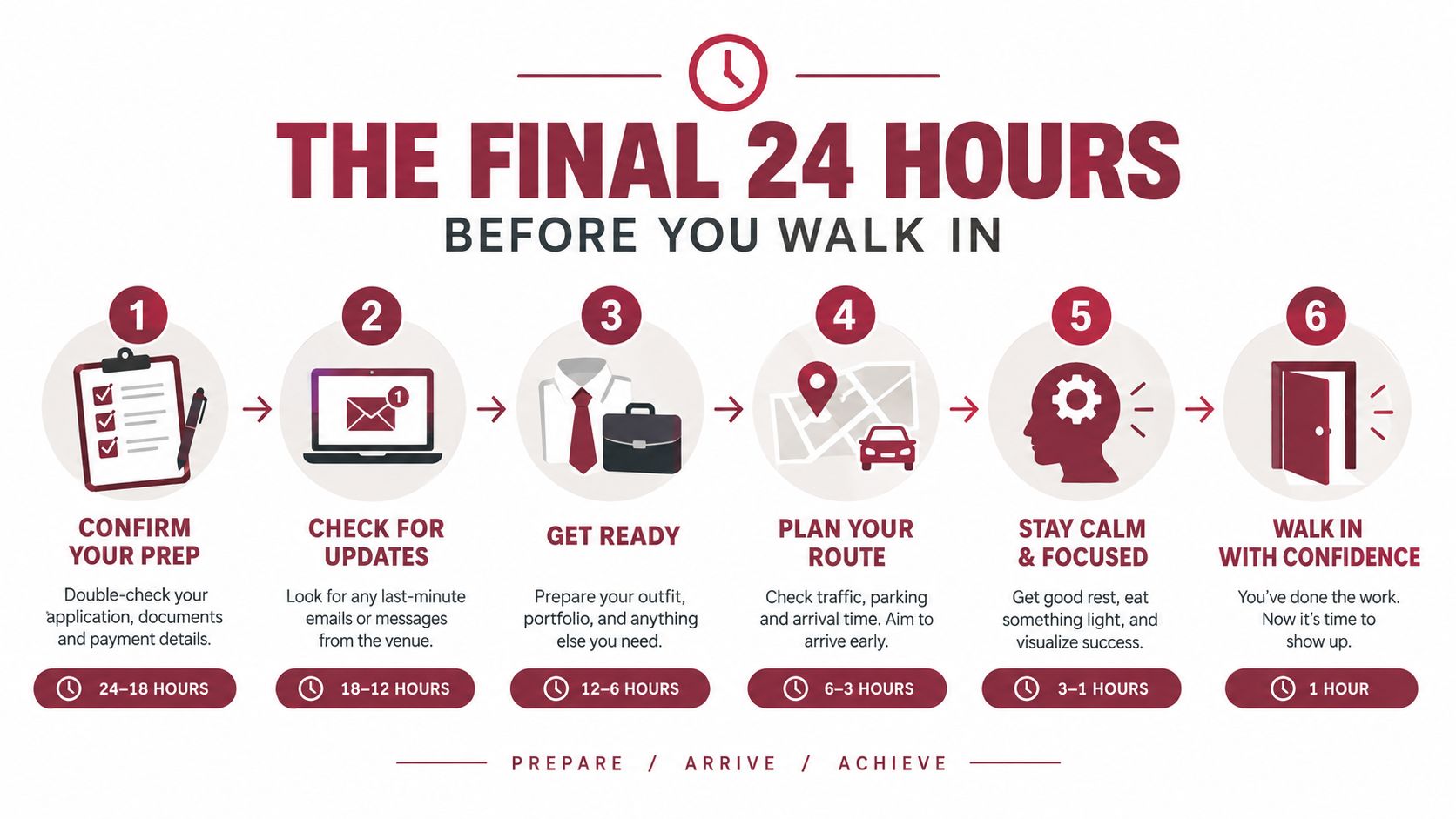
The last day is about arriving with clean, calm, accessible skin. Confirm whether your clinic wants a clean shave the day before or the morning of treatment. Shaving too early may leave visible growth, while shaving too aggressively right before treatment can create razor irritation, so the provider's preference matters.
On the treatment day, remove products from the treatment area unless your clinic tells you otherwise. That generally means no moisturizer, body oil, deodorant, perfume, or makeup on facial treatment zones. If you're treating the underarms, bikini line, or legs, check the area carefully for product residue.
Make the appointment easier on your skin
Wear loose clothing that won't rub the treated area. Soft cotton layers can be more comfortable over the legs, underarms, or bikini line than tight waistbands or rough fabrics. Eat beforehand and hydrate normally so you're not arriving distracted by hunger or thirst.
Numbing products deserve a separate conversation. Don't apply numbing cream on your own unless the clinic has approved the product, amount, timing, and application area. If your provider allows topical anesthetic, this resource on trusted numbing cream by MEDISTIK offers background on lidocaine-based comfort products. Arrive without residual cream unless your clinic specifically instructed you to apply it.
Bring information, not just identification
Bring a current list of medications and supplements. Include the name of any recent antibiotic or isotretinoin course, even if you've finished it. If you're switching providers, bring photos or notes from previous treatments, including the treated areas, approximate settings if you were given them, and any reaction you experienced.
Arrival check: Clean skin, the correct shave, loose clothing, and an honest update about medications or recent sun exposure give your clinician the clearest starting point.
If the skin is unexpectedly irritated, sunburned, rashy, or recently treated with another cosmetic procedure, call before leaving home. It's better to clarify than to arrive hoping the provider won't notice.
Medications and Health Details to Disclose Upfront
The intake form is a safety tool, not paperwork to rush through. A clinician needs to know about changes that could affect photosensitivity, healing, pigment response, infection risk, or the timing of treatment.
Tell the provider if you've started, stopped, or changed any medication in the last 90 days, including antibiotics, isotretinoin, acne treatments, psychiatric medications, and supplements. Don't assume an over-the-counter product is irrelevant. The safest approach is to provide the exact name and let the clinician decide whether it affects candidacy.
Details that can change the plan
Disclose recent or current cold sores and genital herpes. Also mention a history of keloids or abnormal scarring, pregnancy or recent breastfeeding, chronic skin conditions such as vitiligo or eczema, and any active rash, wound, or infection in the treatment area.
Recent cosmetic procedures matter too. Tell the clinic about chemical peels, microneedling, injectables, resurfacing, or other treatments performed over the same skin. Depending on the situation, the clinician may postpone treatment, lower energy settings, select another device, arrange antiviral preparation, or perform a test spot when clinically indicated.

Supplements belong in the conversation
Patients often remember prescriptions but forget vitamins, herbal products, and wellness supplements. Bring the full list, including anything you take intermittently. For general context on how nutritional products are discussed in skin-care routines, you can review how vitamins transform your glow, then show your own clinician the specific products you use.
Pregnancy questions deserve a direct answer from your provider rather than an online guess. Spa Black's guidance on laser hair removal while pregnant can help you prepare for that conversation. The important point is simple: disclose pregnancy, possible pregnancy, and recent breastfeeding before treatment so the clinic can determine whether to proceed.
Questions Worth Asking at Your Consultation
A good consultation should leave you understanding the plan, not just knowing the appointment time. Ask which device the clinic recommends and why it fits your skin type, hair color, treatment area, and recent tanning history. If the provider suggests a test spot or conservative settings, ask what they're evaluating and how the result will influence the session.
Questions about results
Ask how the clinic defines successful treatment. The appropriate benchmark is usually hair reduction, not guaranteed removal. Ask what visible regrowth the provider expects before the next session, how the body area affects scheduling, and whether maintenance treatments may be needed.
You can also ask:
- Session planning: How will you decide when the next treatment should occur?
- Candidacy: What skin, hair, medication, or health factors would make you postpone treatment?
- Safety: Which reactions are expected, and which symptoms should prompt a call?
- Preparation: When should I shave this specific area, and which products should I pause?
- Continuity: What happens if I need to reschedule during the series?
Pricing deserves clarity before you commit. Ask whether the quoted cost is per session or part of a package, whether membership options apply, and what happens financially if a session is missed. Spa Black's medical spa model includes laser hair removal among its aesthetic services, with two San Antonio locations operating under medical oversight. Confirm current addresses, phone numbers, availability, and booking terms directly with the practice.
Your screenshot-ready timeline
- Four to six weeks out: Stop waxing, plucking, threading, and electrolysis according to the clinic's required interval.
- Several weeks out: Avoid outdoor and indoor tanning, stop self-tanner, and protect exposed treatment areas with broad-spectrum SPF 30 or higher.
- Final week: Ask which irritating products and active skincare ingredients to pause.
- Day before or appointment day: Shave exactly as the clinic directs.
- Appointment day: Arrive with clean skin, no unapproved products on the treatment area, comfortable clothing, and an updated medication list.
- Before treatment begins: Disclose tanning, skin conditions, recent procedures, medications, supplements, pregnancy or breastfeeding, and any history of abnormal scarring.
Spa Black offers laser hair removal consultations and treatment planning for patients in San Antonio who want a preparation timeline matched to their skin, hair, treatment area, and medical history. Visit Spa Black to review the service and request an appointment before your first session.