


You're standing in bright bathroom light, leaning closer to the mirror than you'd like, tracing the acne marks that didn't fade and the rough patch that makeup keeps catching on. You don't want surgery, and you don't want a sales pitch. You want to know whether Microneedling San Antonio providers offer could actually help, what it involves, and what could go wrong. That's a reasonable place to start, and it's where this guide starts too.
Table of Contents
- Why San Antonio Residents Are Asking About Microneedling
- What Microneedling Is and How It Works
- Who Qualifies and Who Should Wait
- Benefits and Expected Results Over Time
- Recovery Timeline and Aftercare Basics
- Morpheus8 Versus Traditional Microneedling at Spa Black
- Pricing, Locations, and How to Book at Spa Black
Why San Antonio Residents Are Asking About Microneedling
That mirror moment usually isn't about one spot. It's the combination. Uneven texture from old breakouts, fine lines that look deeper by afternoon, and a dull surface that no new cleanser seems to fix. You search for something non-surgical, find a dozen options, and quickly realize the hard part isn't finding a treatment. It's telling the difference between a treatment that fits your skin and one that just sounds good.
You're not searching in a small market, either. San Antonio had 1,434,625 residents in the 2020 census, while Bexar County recorded 2,009,324 residents on the same date, so the city alone made up roughly 71.4% of the county population according to U.S. Census QuickFacts for San Antonio. That leaves about 574,699 county residents outside city limits. Those numbers don't mean everyone's a candidate for treatment. They explain why so many local practices compete for your attention, and why clear information matters more than a catchy offer.
What Most Readers Actually Want to Know
People comparing options tend to ask the same practical questions, just in different order.
- What it does: Does it smooth texture, soften scars, or both, and how?
- Who it suits: Does skin tone, active acne, or past discoloration change the answer?
- What it costs in time: How many visits, how much redness, and when do results show?
- Which device: Is a standard needle treatment enough, or does added radiofrequency energy change the risk and the result?
Those questions have honest, sometimes unsatisfying answers. Eligibility, your goals, and who performs the treatment shape the outcome as much as the device itself. A provider who won't discuss limits, pigment risk, or why you might need to wait isn't giving you the full picture.
A useful filter: If a consultation feels like it's only about booking you, and never about whether you should book at all, you're missing information you need.
This guide walks through the mechanism first, then candidacy, results, recovery, and the choice between traditional treatment and Morpheus8 at Spa Black in San Antonio. It closes with pricing factors and booking, so you can decide your next step with your eyes open.
What Microneedling Is and How It Works
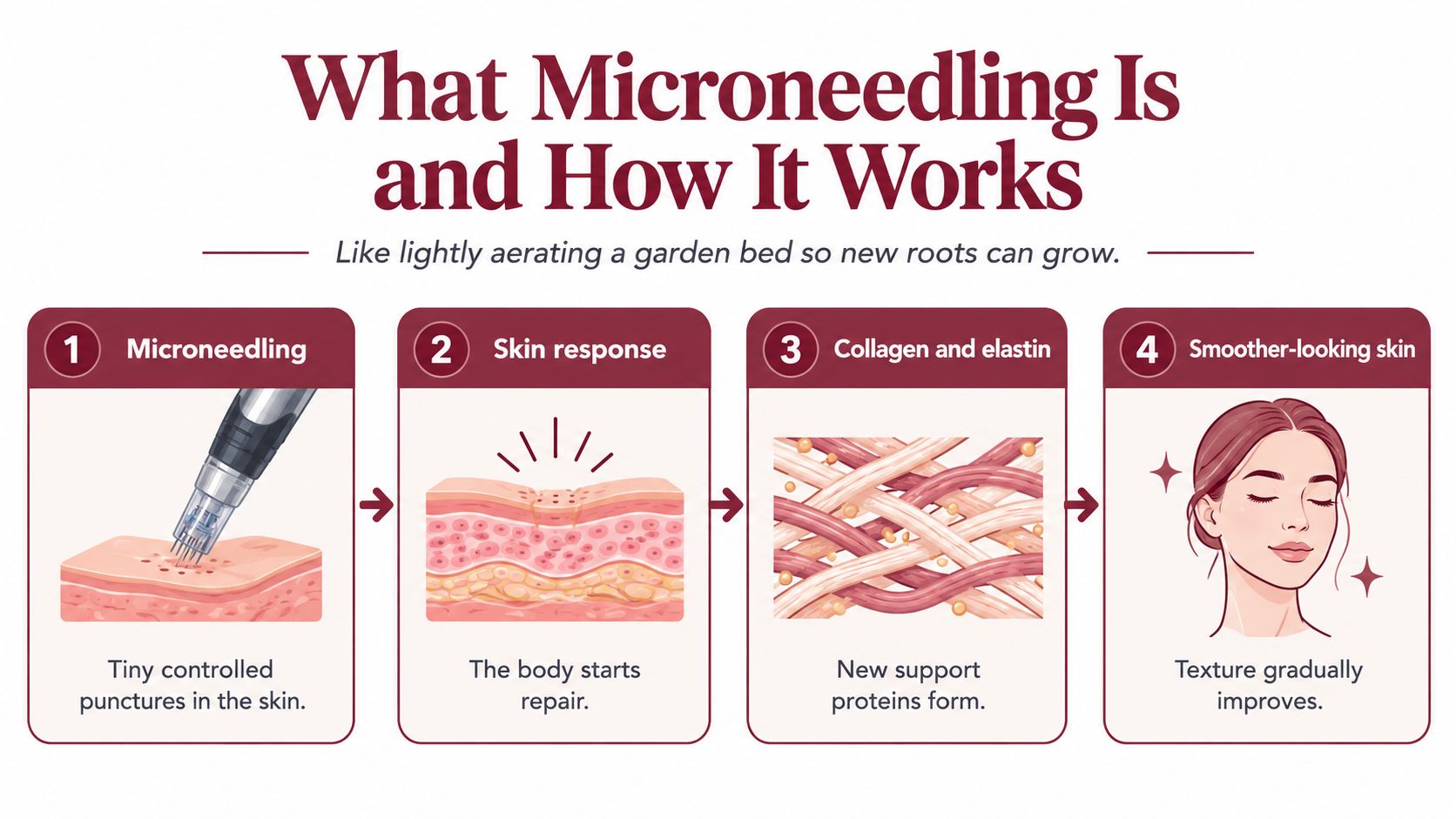
Think of a garden bed that's been lightly aerated. You poke many small holes, not to damage the soil, but so water, air, and new roots can move through it better. Microneedling works on a similar principle, though the biology is more precise. A device moves multiple small needles in and out of the skin, creating numerous controlled puncture channels. Those tiny injuries are the point. They signal your body to start repairing the area.
That repair response is why the American Academy of Dermatology calls the procedure collagen-induction therapy, a term explained in the FDA overview of microneedling devices. As healing begins, fibroblast activity increases and your skin produces new collagen and elastin, the proteins that give skin its support and spring. Over time, that new scaffolding can make acne scars and wrinkles less noticeable and leave tone and texture more even.
The Sequence From Treatment to Change
Here's the order, because the order explains the timeline.
- Puncture: Fine needles enter and leave the skin repeatedly, disrupting scarred collagen bundles in treated areas.
- ** signaling:** Your body reads those channels as controlled injury and sends wound-healing signals to the area.
- Building: New collagen and elastin form gradually, which is why nothing looks finished the next morning.
- Remodeling: The new support tissue matures, and surface texture can look smoother as weeks pass.
Depth matters within that sequence. For facial acne scars, published studies have used needle depths from about 0.8 to 3.5 mm, with 1.5 mm the most common protocol, according to a review of microneedling for acne scars in the International Wound Journal. Deeper isn't automatically better. Depth should match scar shape and how thick the skin is in that spot, because deeper settings raise tissue trauma, pain, and bleeding risk.
One distinction will matter later. Mechanical microneedling uses needles alone, while energy-assisted versions add radiofrequency heat through those needles. Same basic door into the skin, different tools once you're inside.
Because collagen takes time to form, visible improvement may begin within several weeks, while full results commonly take several months. If someone promises a finished result in a weekend, they're describing the recovery of the surface, not the remodeling underneath it. Those are two different clocks, and confusing them is where most disappointment starts.
Who Qualifies and Who Should Wait
Candidacy isn't a yes or no stamp. It's a set of factors a provider weighs together, and your consultation should document each one before anyone picks a device setting. Two people with the same acne scars can get different recommendations because their skin history differs.
Start with the scar itself. A provider should record your scar type, because shallow rolling scars, deeper narrow scars, and raised scars don't respond the same way. They should also note your Fitzpatrick skin type, which describes how your skin responds to sun and injury. That classification helps predict pigment risk, which is the next factor.
Reasons to Pause or Adjust the Plan
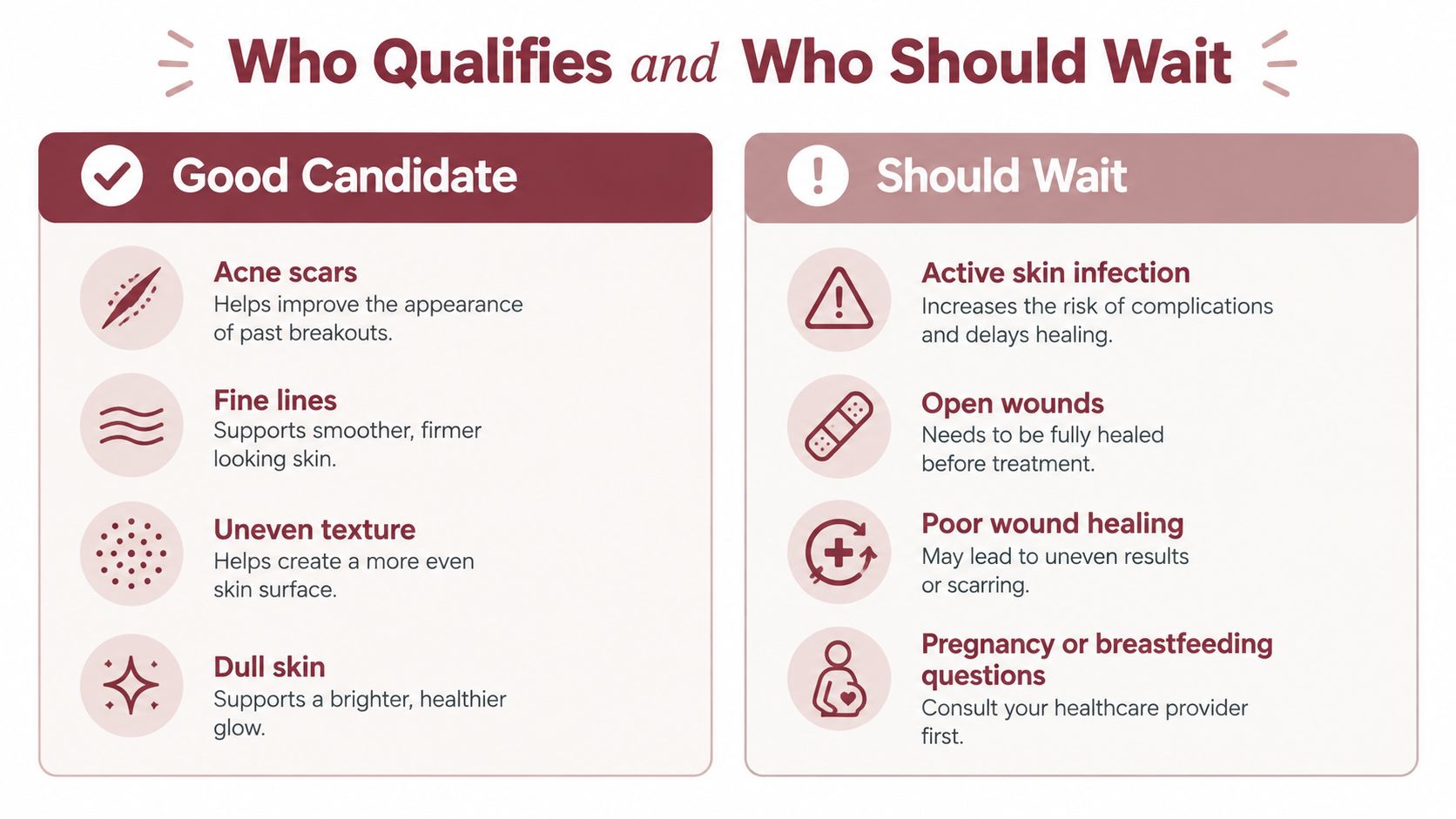
- Active acne or infection: Treating through inflamed or infected skin can spread irritation and worsen healing, so this usually means waiting.
- History of keloids: If your skin tends to overbuild scar tissue, creating controlled wounds needs extra caution.
- Prior post-inflammatory hyperpigmentation: If past breakouts or injuries left dark marks that lingered, your provider needs that history upfront.
- Recent tanning or melasma: Pigment that's already reactive can darken further after injury, even careful injury.
That last point deserves plain language for readers with deeper skin tones. You'll sometimes hear that microneedling suits everyone. That's too broad. A systematic review of RF microneedling in skin of color found 35 studies, but only one focused on hyperpigmentation, seven reported transient post-inflammatory hyperpigmentation, one reported mild prolonged hyperpigmentation, and one reported permanent scarring, as summarized in the PubMed record for that systematic review. Lower risk than some heat-based resurfacing doesn't mean no risk.
Why San Antonio Sun Changes the Conversation
South Texas sun isn't a footnote here. If you're outside daily, recently tanned, or prone to discoloration, timing and sun protection become part of candidacy, not just aftercare. Pre-treatment pigment control, conservative settings, or a test area may be appropriate, and strict photoprotection afterward isn't optional.
Bring your pigment history to the consultation even if nobody asks. How your skin reacted to your last breakout, cut, or peel tells a provider more than your current skincare shelf does.
A strong candidate generally has healed, non-infected skin, realistic goals, and a schedule that allows sun protection and follow-up. Someone who should wait isn't rejected forever. They're being timed correctly, which protects the result they'd eventually get.
Benefits and Expected Results Over Time
Expect a gradual softening, not an erasure. Microneedling is studied mainly for scar remodeling, smoother texture, and more even tone, and those changes build as collagen forms. Planning around a single appointment sets you up to judge the treatment before it's had a chance to work.
For acne scars, the American Academy of Dermatology reports patients may need 3 to 5 sessions scheduled 2 to 4 weeks apart, and studies it cites found that plan reduced scar appearance by about 50% to 70%, according to the AAD guide to microneedling for scars. Read that carefully. It's a multi-session outcome range, not a promise attached to your first visit.
What a Study Outcome Does and Doesn't Tell You
A 2020 prospective observational study followed 120 consecutive patients with skin phototypes I through VI who had scars from acne, trauma, or surgery. They received one to six monthly treatments, averaging 2.5 sessions, and each patient's scars improved by at least 50%, with more than 80% reaching 50% to 75% improvement and 65% exceeding 75%, as reported in the PubMed abstract for the 2020 scar study. The researchers found no significant difference between facial and nonfacial scars.
That's encouraging, and the range of skin types makes it relevant in a diverse city. Still, it was observational research using one specific mechanical device and protocol, with follow-up at 1, 3, 6, and 12 months. Your provider's device, depth, and spacing may differ. A study outcome describes a group under set conditions. It doesn't guarantee your individual result.
A Realistic Timeline in Plain Terms
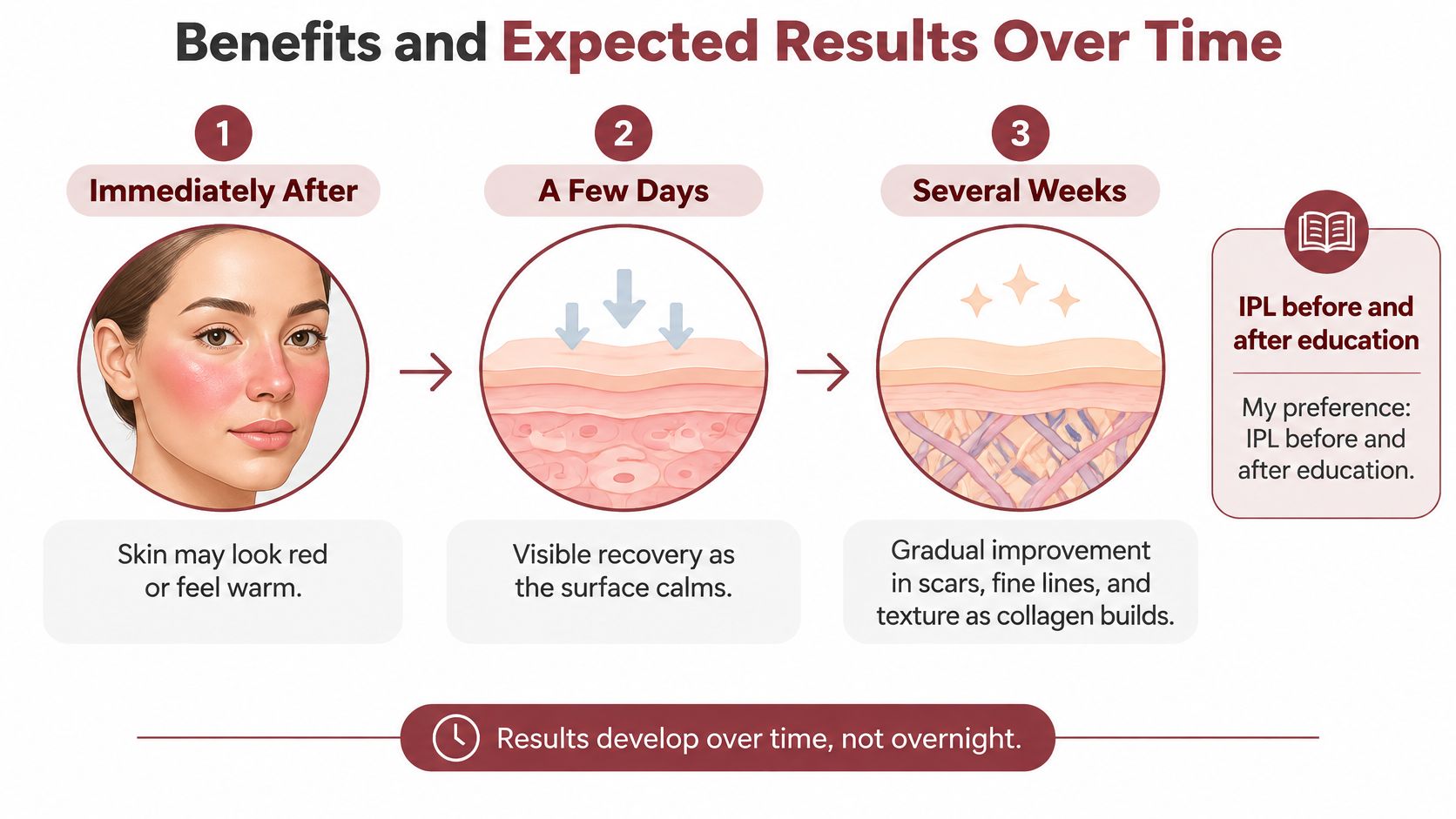
Immediately after treatment, you're looking at recovery, not results. Over the following days the surface calms. Over several weeks, early collagen can start changing how light hits a scar or fine line, so texture may look softer in photos before it feels dramatically different up close. Fuller change takes months, which is why providers space sessions and reassess rather than stacking treatments quickly.
If uneven color is part of your concern alongside texture, it helps to understand how discoloration is evaluated separately, which is covered in this guide to treating skin discoloration. Texture and pigment overlap, but they aren't the same problem and they don't always improve on the same schedule.
Your outcome will depend on scar depth, skin type, session consistency, and how well you protect healing skin from sun. Measured expectations aren't pessimism. They're what let you recognize genuine improvement when it arrives.
Recovery Timeline and Aftercare Basics
It's smart to plan around redness. Recovery from microneedling is generally short and predictable, but predictable doesn't mean identical for everyone. Device intensity, needle depth, and your own sensitivity all shift the window.
A broader facial-rejuvenation meta-analysis reported transient erythema in 6.8% of patients, scaling in 1.7%, burning in 1.5%, and itching in 0.4%, figures detailed in a systematic safety review of microneedling adverse events. The most common short-term effects across that review were temporary redness, swelling, pain, dryness or flaking, and irritant dermatitis, typically settling within several days.
What Normal Recovery Usually Looks Like
- First day or so: Redness and warmth, sometimes compared to a mild sunburn feeling, with sensitivity when you wash your face.
- Next several days: Dryness, tightness, or light flaking as the surface renews itself.
- After that: The surface looks calmer while remodeling continues underneath, out of sight.
Aftercare Priorities Your Provider Will Set
Keep it simple while your barrier recovers. Gentle cleansing, strict sun protection, and a pause on irritating active products are the usual priorities, with exact timing set by your treating clinician and the intensity used. Don't improvise with strong serums just because the channels might absorb them better. Safety guidance specifically urges caution with products that aren't approved for intradermal use, since newly created microchannels change what reaches deeper skin.
Watch for this instead: Persistent pigment change, worsening pain, drainage, or healing that stalls isn't normal recovery. That's your cue to contact the treating practice promptly rather than waiting it out.
Persistent complications reported in safety literature include post-inflammatory hyperpigmentation, tram-track scarring, and granulomatous reactions. Those aren't the expected path, but knowing they exist helps you tell the difference between patience and a problem. Caution is also warranted with active infection, darker skin types, and metal allergy, which is another reason your history matters before treatment.
Plan your appointment around your calendar realistically. If you've got photos, an outdoor event, or a work presentation in San Antonio heat within a few days, say so. Your provider can help you pick a date where redness and sun avoidance won't become a daily negotiation.
Morpheus8 Versus Traditional Microneedling at Spa Black
This is the decision most readers get stuck on, partly because the names blur together. Both use needles. Only one adds heat. That single difference changes what each treatment is chosen for, how it feels, and what safety questions you should ask.
Morpheus8 combines microneedling with radiofrequency energy to support skin tightening, texture improvement, and collagen remodeling. Traditional microneedling relies on the needle injury alone to trigger repair. Neither is universally better. They're different tools, and the right one depends on whether laxity is part of your concern or whether surface texture and scarring are the main issue.
| Factor | Morpheus8 (RF microneedling) | Traditional microneedling |
|---|---|---|
| Mechanism | Needles plus radiofrequency energy delivered into deeper tissue | Needles alone create controlled puncture channels |
| Often chosen for | Texture concerns combined with mild laxity, where tightening support is a goal | Acne scarring, uneven texture, and fine lines without a tightening goal |
| Settings to discuss | Needle depth, energy level, treatment area, and skin thickness | Needle depth, number of passes, and session spacing |
| Safety conversation | Device-specific consent covering heat-related risk and operator training | Sterile technique, pigment risk, and products used on treated skin |
| Limits to hear clearly | Not a facelift substitute, not painless, no guaranteed or permanent tightening | Gradual results over multiple sessions, no guaranteed scar removal |
The Safety Conversation You Should Expect
Generic reassurance about minimal downtime isn't enough for an energy-based treatment. Recent FDA communications report serious complications in certain uses of RF microneedling, including burns, scarring, nerve damage, disfigurement, fat loss, and cases needing medical or surgical intervention, as described in the FDA safety communication on RF microneedling risks. That doesn't make RF microneedling unsafe by default. It means risk depends on the indication, anatomy, energy delivery, and clinical oversight, and your consent discussion should reflect that.
Ask direct questions and expect direct answers.
- Which treatment am I getting: Mechanical microneedling or RF microneedling, and why that one for my skin?
- Who performs and supervises it: What training do they have with this specific device?
- What settings and why: How do depth and energy relate to my skin thickness and treatment area?
- If something looks wrong: How are complications handled, and which symptoms need urgent follow-up?
For readers also weighing resurfacing alternatives for deeper texture concerns, this overview of fractional CO2 laser skin resurfacing explains a different category of treatment with its own recovery profile. Comparing categories candidly, rather than assuming needles plus energy wins by default, leads to better decisions.
At Spa Black Med Spa, both standard microneedling and Morpheus8 sit within the facial rejuvenation services offered in San Antonio. Your consultation is where that menu becomes a recommendation, based on your scar type, skin tone, pigment history, and tolerance for downtime. If price is the only difference anyone explains to you, keep asking questions.
Pricing, Locations, and How to Book at Spa Black
You'll want a single number. So does nearly everyone. The honest answer is that microneedling pricing depends on variables a provider can't confirm without seeing your skin, so a quoted figure before consultation tells you less than you'd hope.
What Actually Drives the Price
- Treatment area: A focused scar area and a full-face session aren't the same appointment.
- Device chosen: Traditional microneedling and Morpheus8 involve different technology, time, and oversight.
- Number of sessions: A multi-session plan costs more in total than one visit, even if each visit is priced clearly.
- Consultation findings: Pigment preparation, conservative settings, or a staged plan can change the recommendation.
If you're comparing resurfacing budgets more broadly before you commit, this practical guide to skin resurfacing cost breaks down how those pricing factors tend to stack up. Use it to frame questions, then get a personalized quote based on your own plan rather than budgeting around someone else's treatment.
What to Bring to Your Consultation
Come with information, not just a goal photo. Bring a list of medications and supplements, your history with acne and scarring, any past pigment reactions or keloids, recent tanning or sun exposure habits, and prior treatments including peels, lasers, or injectables. Note your calendar constraints too. Upcoming outdoor events in the Texas sun affect timing more than you might expect.
Before you book treatment: Candidacy comes first. A provider should confirm you're a fit, explain which device they recommend and why, and outline recovery before any payment conversation turns into a schedule.
Spa Black is a medical spa in San Antonio, Texas delivering non-surgical aesthetic care under physician oversight across two San Antonio locations, with online booking and pay-now options available. That structure matters for a treatment where device settings and follow-up access count. If something about your recovery concerns you, you want a practice you can readily reach.
Booking is straightforward. Choose a consultation through Spa Black's online booking, bring the history above, and use that visit to confirm candidacy, device choice, session spacing, and total plan cost. Don't book a series on the spot if your questions about pigment risk or RF settings haven't been answered yet. A good consultation can end with a plan, a later start date, or a recommendation to wait, and all three are legitimate outcomes.
Your next step isn't committing to needles. It's committing to a conversation where your skin, not a promotion, decides what happens.
If you're weighing microneedling for acne scars, uneven texture, or fine lines, Spa Black offers traditional microneedling and Morpheus8 consultations at its San Antonio locations so you can compare both options against your skin type and goals. Book a consultation to confirm candidacy, discuss device settings and recovery openly, and get a personalized plan and quote. Start by visiting Spa Black to schedule online.