


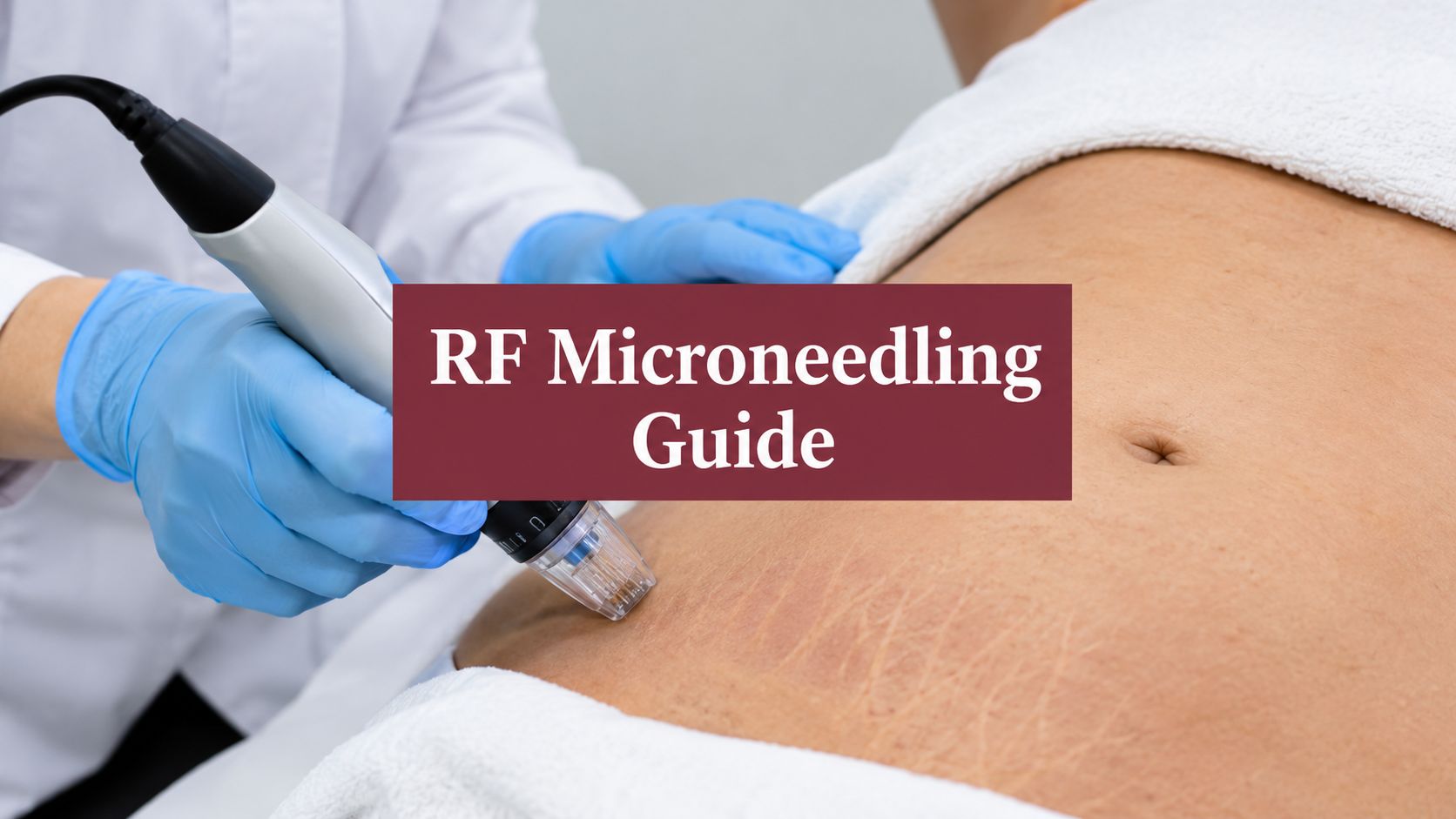
You notice the lines while changing clothes, perhaps across your hips after weight change or along your abdomen after pregnancy. They may be red, purple, white, or silver, and although they're common, their texture can make creams and oils feel frustratingly ineffective. RF microneedling for stretch marks is designed to address that deeper texture rather than just moisturizing the surface.
The treatment combines controlled microneedling with radiofrequency heat. That combination can improve the appearance of striae, but it won't erase them, and the right protocol depends on the marks' age, your skin tone, your medical history, and how much recovery you can accept.
Table of Contents
- Why Stretch Marks Are Hard to Treat
- How RF Microneedling Works
- Setting Realistic Expectations by Mark Age and Skin Tone
- What Happens During a Session and How Many You May Need
- What the Clinical Evidence Shows
- Candidacy, Side Effects, and Recovery Reality Check
- How RF Microneedling Compares to Other Stretch-Mark Options
- Talking With a Provider and Next Steps
Why Stretch Marks Are Hard to Treat
Stretch marks, medically called striae distensae, develop when skin stretches or changes faster than its deeper support structure can adapt. Pregnancy, growth, weight changes, and muscle development can all contribute. The visible lines are the surface expression of altered tissue in the dermis, the skin layer beneath the outer barrier.
That distinction explains why a moisturizer may make the area feel softer without changing the mark itself. Oils, creams, and at-home rollers work mainly at the surface, while stretch marks involve disrupted collagen and elastin deeper in the skin. A topical product may support hydration, but it usually can't rebuild the scar-like structure that created the indentation or color difference.
The depth of the problem matters
Healthy dermal tissue contains an organized network of collagen and elastin. When that network is disrupted, the body repairs it with tissue that doesn't perfectly match the surrounding skin. The result may include a thinner-looking area, a change in texture, and a visible difference in color.
An at-home roller also creates a less controlled injury than a professional device. It may not reach the target tissue consistently, and repeated aggressive use can irritate the skin or create pigment problems. More injury isn't automatically better. The goal is a measured signal that starts remodeling without causing unnecessary trauma.
Practical rule: If a treatment only hydrates the surface, it may improve how the skin feels. A meaningful structural change requires a plan that reaches the dermis.
In-office procedures still have limits. No treatment can promise complete removal of stretch marks, because remodeled skin won't necessarily return to its original architecture. A realistic goal is less contrast, smoother texture, and a softer transition between the mark and the surrounding skin.
That's why energy-based treatments attract interest. They attempt to stimulate new collagen where the structural change exists, rather than asking a surface product to solve a deeper problem.
How RF Microneedling Works
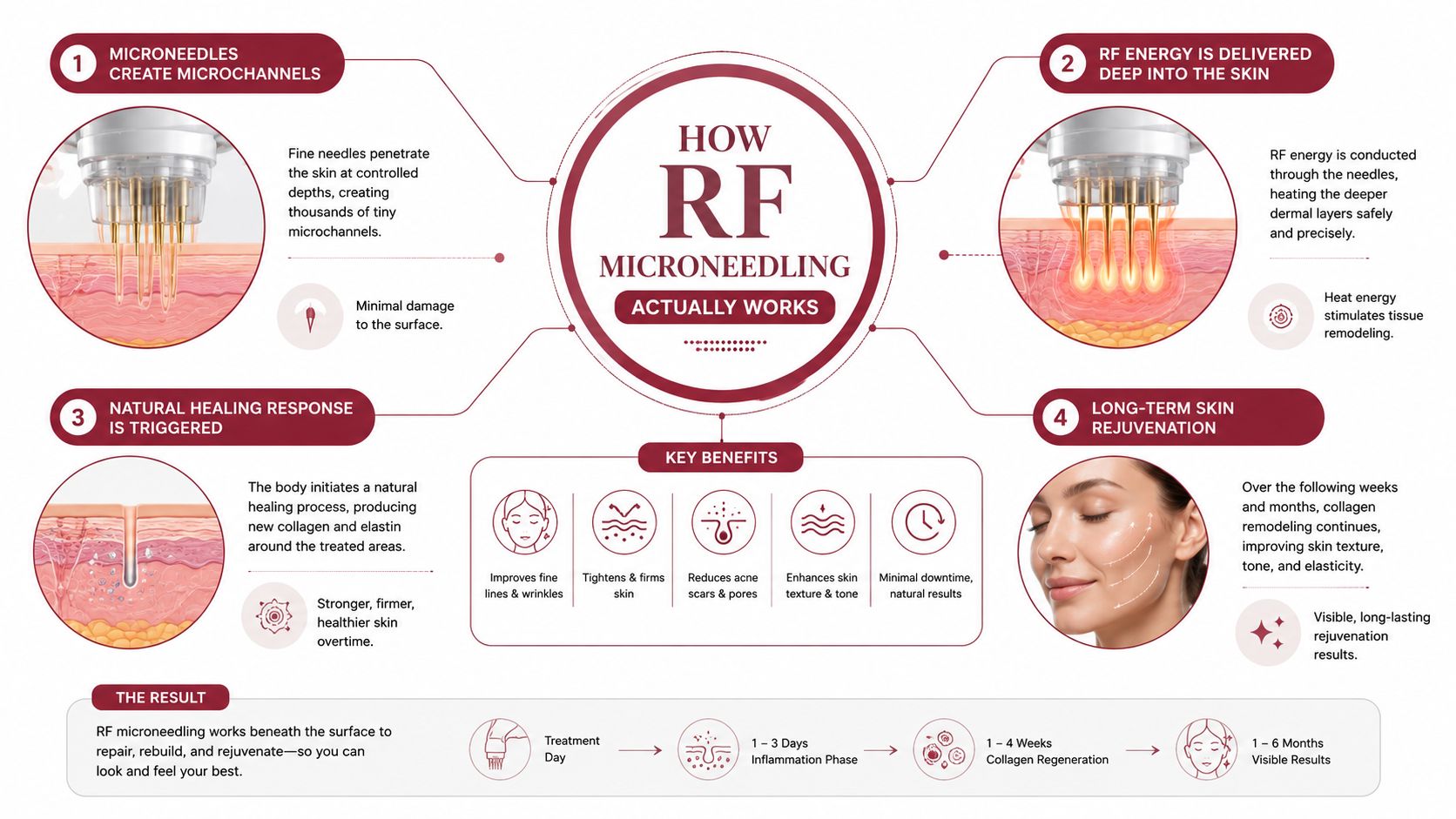
RF microneedling combines two controlled signals: tiny punctures and heat delivered beneath the surface. A professional device creates microchannels in the skin, prompting a wound-healing response that can support collagen remodeling over time.
Insulated or coated needles enter the dermis to a selected depth before releasing bipolar radiofrequency energy through their tips. This heats the tissue around each tip while limiting unnecessary energy at the surface. Needle depth, spacing, and power can be adjusted for the marks being treated and the person's skin response.
A leather wallet with faded, damaged areas offers a useful comparison. Microneedling is like making carefully placed pinpricks that signal the material to repair itself. RF adds controlled warmth from within, creating a deeper remodeling stimulus. The treatment encourages tissue to reorganize gradually across multiple sessions, rather than filling a stretch mark in one appointment.
Why the heat changes the treatment
Needling supplies a wound-healing cue. RF contributes thermal energy that may support collagen contraction and longer-term collagen and elastin remodeling. Combining both signals can produce a stronger remodeling effect than RF delivered without needling, while the added punctures and heat may also increase redness, downtime, and pigment-change risk, particularly for more pigment-prone skin.
Results depend on energy level, needle depth, spacing, skin response, and the type of striae. The procedure works as a remodeling tool, so temporary redness or swelling can appear before deeper changes develop.
A consultation should examine the specific marks, skin tone, healing history, and proposed settings, rather than focusing only on the device name. Spa Black's educational guide to microneedling in San Antonio explains the broader treatment concept before you decide whether adding RF fits your goals.
Setting Realistic Expectations by Mark Age and Skin Tone
The color of a stretch mark gives a provider useful information about its stage. Newer red, pink, or purple marks, often called striae rubrae, tend to have more active vascular and inflammatory features. They may respond more visibly because the tissue is still biologically active and has more remodeling potential.
Older white or silver marks, called striae albae, have usually settled into a more mature pattern. They can improve, but the change may be more gradual and less dramatic. A provider may need to focus on blending the color difference and softening the indentation rather than promising a complete visual match.
What “improvement” should mean
Look at before-and-after photos carefully. A successful result may show:
- Softer edges, so the marks attract less attention.
- A smoother surface, especially under direct light.
- Less visible contrast, rather than total color elimination.
- Reduced apparent depth or width, although the degree varies.
The 2024 systematic review and meta-analysis found that microneedle radiofrequency produced a statistically significant clinical improvement in striae distensae, with a standardized mean difference of 0.57, a 95% confidence interval of 0.20 to 0.94, and P = 0.003. The same review found patient satisfaction broadly comparable with laser-based treatment, supporting RF microneedling as a measurable option while still not suggesting complete eradication. Read the systematic review and meta-analysis on PubMed for the pooled evidence.
Skin tone adds another layer to treatment planning. Darker skin can absolutely be considered for RF microneedling, but conservative settings, careful spacing, and strong aftercare may be especially important because inflammation can trigger post-inflammatory hyperpigmentation. A provider should show results involving marks with a similar age and a similar skin tone, not just select the most impressive image in a gallery.

What Happens During a Session and How Many You May Need
A treatment plan starts with assessment, not the handpiece. The provider examines the mark color, texture, location, skin tone, and any active irritation. You'll also discuss health conditions, medications, pregnancy or breastfeeding status, previous procedures, and how much downtime fits your schedule.
A topical numbing product may be used before treatment. During the procedure, the device passes over the selected area while the provider adjusts depth and energy according to the tissue and your comfort. You may feel pressure, heat, or brief pinching. The area commonly looks red and may feel warm or tight immediately afterward.
Why treatment spacing matters
Collagen remodeling continues after the appointment. Treating too soon can add irritation before the skin has completed an important part of its healing response. Providers commonly build a series with several weeks between appointments, but the exact timing should be individualized.
Session count also depends on whether the marks are newer or mature, how large the area is, and how the skin responds. A small cluster on the hips creates a different treatment plan from extensive marks across the abdomen or thighs.
| Mark Profile | Common Session Range | Typical Spacing | Downtime Per Session |
|---|---|---|---|
| Newer, limited red or purple marks | Individualized series | Several weeks between visits | Temporary redness, warmth, or swelling |
| Older, white or silver marks | Individualized series, often more involved | Several weeks between visits | Redness, swelling, sensitivity, and possible rough texture |
| Extensive or mixed-age marks | Customized after assessment | Based on recovery and response | May vary by treatment intensity and area size |
The table is a planning framework, not a prescription. A provider shouldn't promise a fixed number of sessions without examining the marks. Ask what would make them recommend continuing, changing settings, adding an adjunct, or stopping when the improvement has reached a reasonable plateau.
What the Clinical Evidence Shows
The evidence supports a measured conclusion. RF microneedling can improve stretch-mark appearance, while the outcome depends on the protocol, comparison treatment, mark type, and skin response.
A 2022 prospective, randomized, assessor-blinded split-side study compared combined fractional RF plus microneedling with fractional RF alone over three sessions. The combined approach produced significantly better global aesthetic improvement at four, eight, and twelve weeks, with P < 0.05. Objective size measurements improved in both groups, although the difference between groups was not significant. Post-inflammatory hyperpigmentation occurred on the combination-treated sides in 36.4% of cases, compared with 27.3% with RF alone. The result points to a useful trade-off: combining needling with RF may improve the visible assessment while increasing pigment risk. The details appear in the randomized split-side study.
A separate 2022 randomized clinical trial from the Federal University of Pernambuco evaluated non-ablative bipolar RF combined with microneedling for striae alba in women. It found no significant difference from microneedling alone for local temperature increase, dermatology quality-of-life score, or standard photo analysis. Adding RF did not clearly outperform needling by itself on those measures in that study. A more technologically complex protocol therefore does not guarantee a stronger result. The Federal University of Pernambuco trial helps put treatment claims in context.
Combination treatments remain emerging
A 2026 pilot study combined hyperdiluted calcium hydroxyapatite with fractional microneedling RF. Mean MSS scores improved from 14 ± 0.93 at baseline to 6.88 ± 1.64 after treatment, with P <.0001. Only mild transient erythema was reported in two cases, and the study reported no serious adverse events. The 2026 pilot study is encouraging, while its pilot design limits how broadly the findings can guide treatment.
The practical takeaway is clear: the modality has evidence, but the protocol matters. Ask how your provider will reduce pigment risk, why the selected energy level suits your skin tone and marks, and whether an adjunct has evidence for your specific situation. For related background, see Spa Black's guide to RF microneedling for acne scars.
Candidacy, Side Effects, and Recovery Reality Check
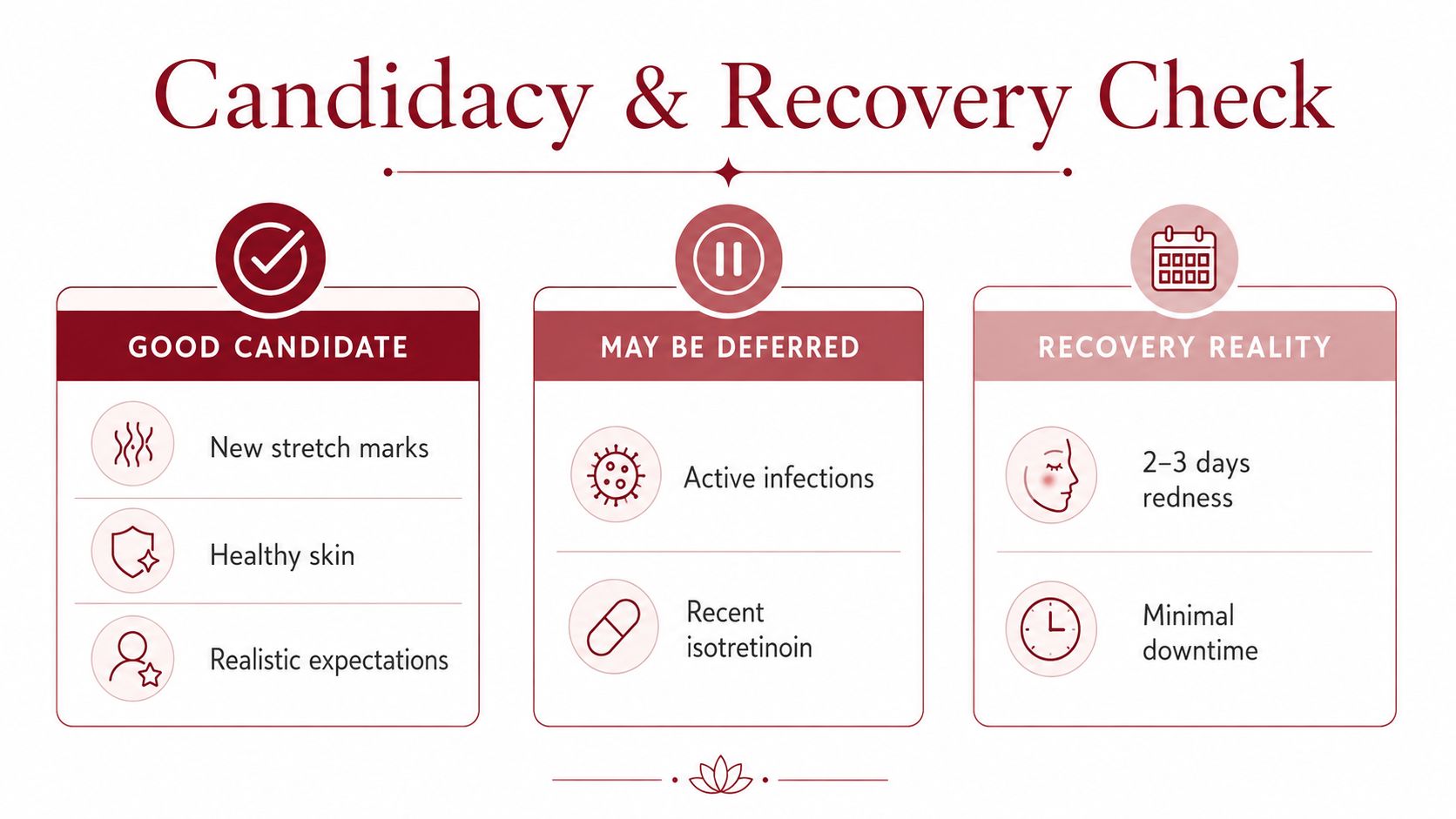
A strong candidate usually has healthy, intact skin in the treatment area and realistic expectations. Newer marks may offer more visible potential, while mature marks require patience. Your provider should also know about medical conditions, medications, previous pigment changes, keloid or abnormal scarring history, and any prior energy-based treatments.
Treatment may be deferred for an active infection, rash, open wound, or significant irritation. Recent isotretinoin use, uncontrolled medical conditions, and pregnancy also require careful review or postponement. Don't treat a consultation form as a formality. These details can change whether treatment is appropriate, how conservative the settings should be, and what aftercare you'll need.
The recovery pattern
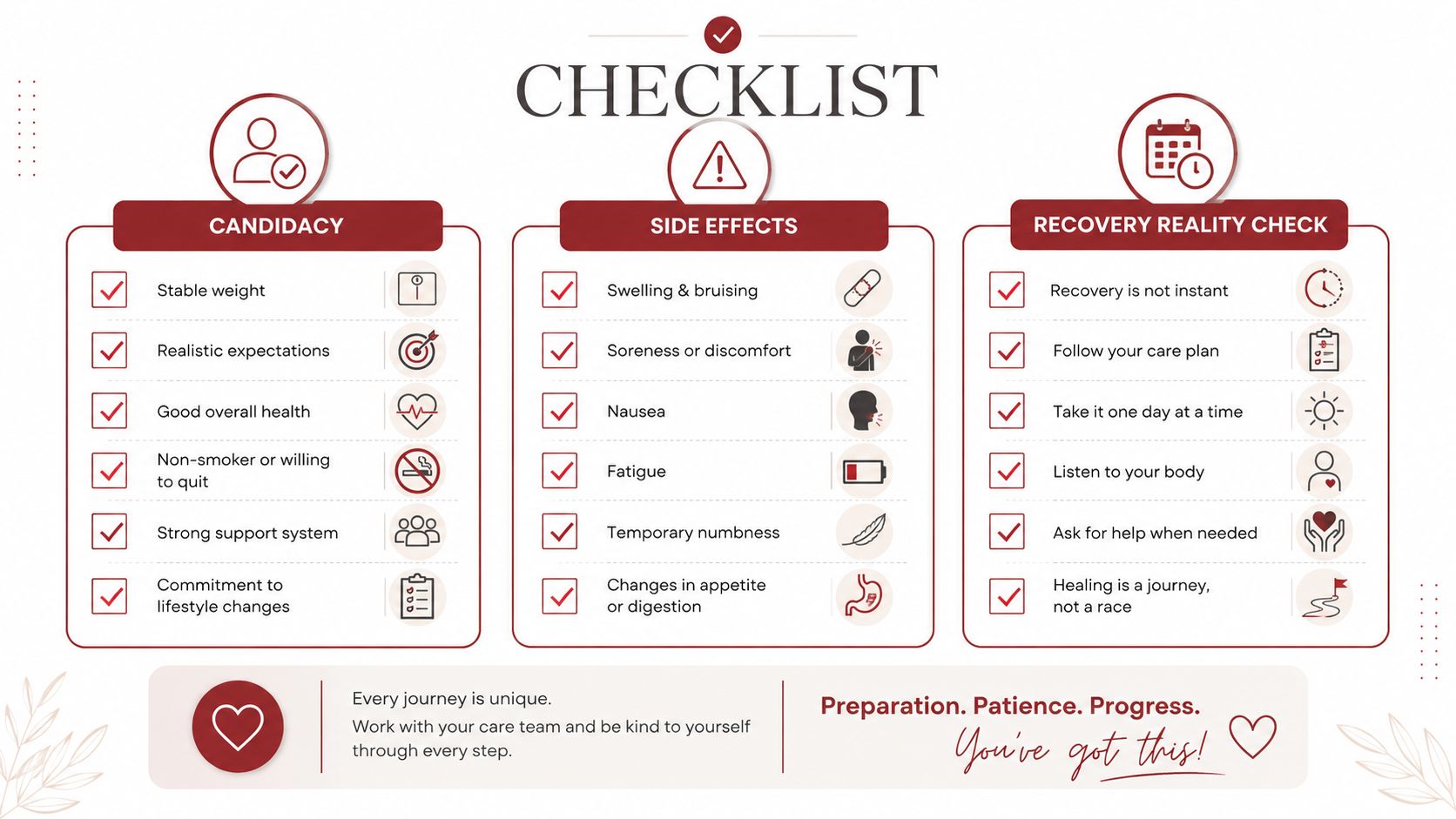
The treatment typically involves a period of visible inflammation. Possible effects include:
- Redness and swelling, often lasting from one to three days.
- A rough or sandpaper-like texture, which may persist for up to a week.
- Warmth, tenderness, or pinkness, especially where energy was delivered more intensely.
- Small breakouts, which can occur during recovery.
- Pigment changes, including prolonged darkening in susceptible skin.
- Grid-pattern marks or scarring, uncommon but possible when energy is stacked too aggressively or aftercare is neglected.
A recent review notes temporary redness, swelling, pinkness for about a week, and occasional breakouts as possible effects, while also suggesting that newer red or purple marks may respond better than older white or silver ones. These points are summarized in the review-based patient guide to RF microneedling.
Keep the area clean, follow the provider's product instructions, avoid picking or rubbing, and protect treated skin from sunlight. Delay intense heat, swimming, and irritating active ingredients until your provider says the barrier has recovered. Contact the practice promptly if pain, swelling, drainage, or pigment change seems excessive or continues to worsen.
How RF Microneedling Compares to Other Stretch-Mark Options
No single treatment wins for every patient. The sensible comparison asks what each option changes, how much recovery it requires, and whether its risks fit your skin.
Traditional microneedling creates controlled channels without the RF heat component. It may suit someone seeking a simpler collagen-remodeling approach or someone whose provider considers heat unnecessary. RF microneedling adds a deeper thermal signal, but that added intensity can bring more discomfort and pigment-management concerns.
Non-ablative fractional laser treatment uses light-based heat without removing the entire surface layer. A 2026 review highlighted that fractional microneedling RF can be more effective than a 1565-nanometer non-ablative fractional laser in some studies, but with greater discomfort. That comparison reinforces the need to weigh efficacy, pain, and skin-type suitability together rather than choosing based on a single headline.
How the alternatives fit
- Ablative fractional resurfacing removes microscopic columns of surface tissue and may create a stronger resurfacing response, but recovery is generally more demanding. It may be considered when texture change is the primary concern and the patient accepts more downtime.
- PRP-augmented microneedling adds a biologic component to the needling process. Whether it's worthwhile depends on the provider's protocol, the evidence available for your mark type, and the added cost and procedure considerations.
- Topical retinoids and peptides may support skin quality or cell turnover, but surface products have limited ability to correct established dermal structure. Retinoids also require medical guidance and aren't appropriate in every situation.
- RF microneedling sits between simpler needling and more aggressive resurfacing for many patients. It offers controlled dermal remodeling with a recovery period that may be manageable, although “manageable” doesn't mean risk-free.
In San Antonio, someone comparing energy-based options can also review Fotona SP Dynamis laser treatment for stretch marks and ask a qualified provider why one approach fits the mark pattern better than another.
Talking With a Provider and Next Steps
Bring photos showing when the marks appeared, any changes in color or texture, and previous treatments. Ask how much experience the provider has treating striae specifically, what results are realistic for your skin tone, and how pigment changes would be handled if they occur.
Before treatment, discuss sun protection, whether to pause retinoids or other irritating products, and how to keep the area comfortable and hydrated. Ask to see results involving similar mark age, body location, and skin tone. A single dramatic photo isn't enough to predict your outcome.
Questions worth asking
- Are the results permanent? Collagen remodeling can be long-lasting, but aging and future stretching can change the skin, and the marks won't be erased.
- Can it be combined with body contouring? Possibly, but timing and recovery must be coordinated by the treatment team. Body contouring doesn't replace stretch-mark remodeling.
- What will it cost? Pricing depends on the treatment area, proposed series, provider, and any adjuncts. Request the full plan rather than a single-session figure.
- When can I be treated again? Re-treatment should wait until the skin has recovered and the provider can assess the response. Don't schedule another session because the first result seems incomplete early on.
If you're considering RF microneedling for stretch marks in San Antonio, schedule a consultation that evaluates the marks in person before committing to a protocol.
Spa Black offers RF and microneedling services, including Morpheus8, for patients exploring skin texture and collagen-remodeling treatments in San Antonio. Visit Spa Black to learn about your consultation options and discuss whether a personalized plan fits your stretch marks, skin tone, and recovery preferences.