


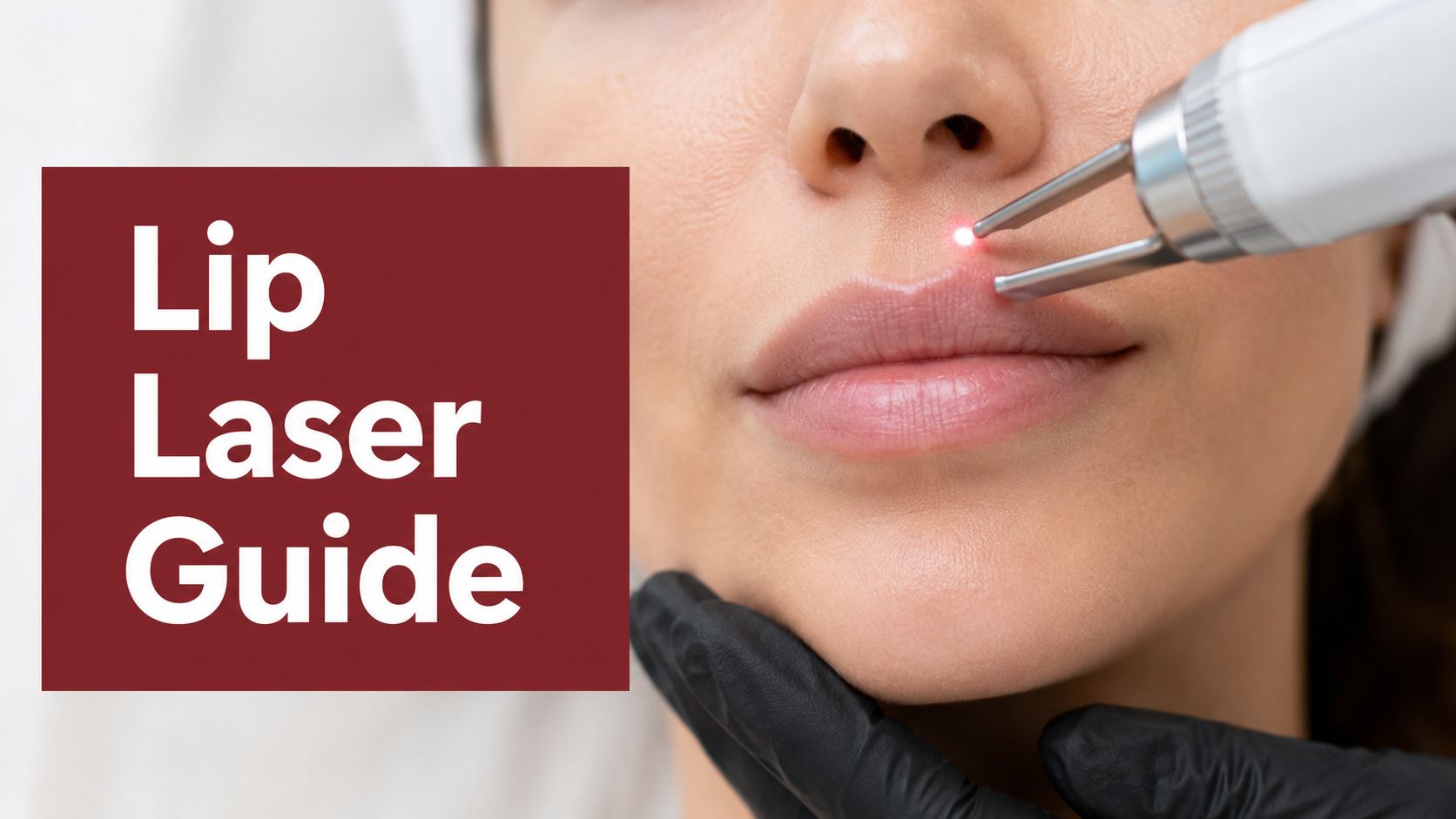
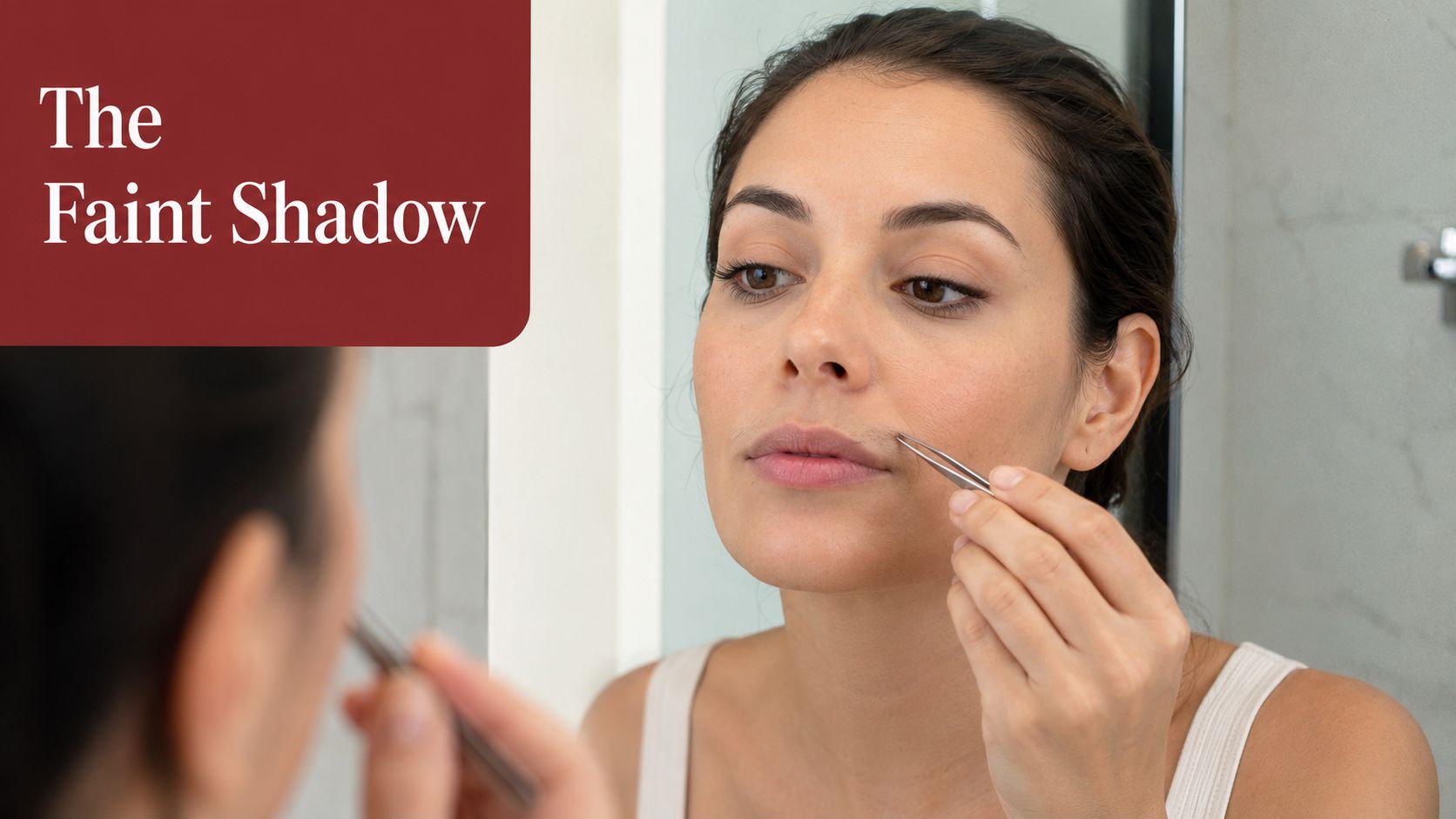
Standing in front of the mirror, it's usually the same story. You tweeze a few hairs, step back, catch the shadow again, then decide whether to wax, bleach, thread, or ignore it until the next event forces the issue. For the upper lip, that cycle gets old fast, because even fine regrowth shows up in bright light and the skin around the mouth tends to react more easily than larger body areas.
Laser hair removal lip treatments solve a different problem than shaving or waxing. They don't just remove visible hair for the moment, they target the follicles that keep producing it, which is why the upper lip is usually handled as a planned series rather than a one-and-done fix. That difference matters if you're tired of scheduling your grooming routine around stubble, irritation, or that faint but persistent mustache shadow.
Table of Contents
- Why the Upper Lip Is Its Own Hair Removal Challenge
- How Laser Hair Removal Actually Works on the Upper Lip
- Who Is a Good Candidate for Upper Lip Laser Hair Removal
- What a Lip Laser Session Actually Feels Like
- Session Count, Timing, and the Real Result Timeline
- Comparing Laser to Waxing, Threading, and At-Home Devices
- Cost, Safety, and How to Choose a Provider
- Your First Step at Spa Black in San Antonio
Why the Upper Lip Is Its Own Hair Removal Challenge
A lot of people meet the upper lip problem in the same unglamorous way, under bright bathroom lighting, holding tweezers too close to the mirror before work or a night out. The area is small, but it's front-and-center, and that combination makes every hair feel more visible than it really is. The lip also sits in one of the most expressive parts of the face, so even mild redness or swelling can feel more obvious than it would on a leg or underarm.
Why this area behaves differently
The upper lip isn't just a smaller version of another body zone. It's a highly visible facial surface with thin skin, high contrast between dark hair and surrounding skin, and in many patients, ongoing hormonal influence that keeps waking up follicles over time. That's why a person can wax the area one week, thread it the next, and still feel like they're chasing the same hairs over and over.
Practical rule: If the upper lip has become part of your weekly maintenance routine, the problem usually isn't effort. It's that the area keeps cycling hair back into view.
Facial hair also reads differently from body hair. On the lip, even fine regrowth can create a shadow that bothers people long before it looks “full” to anyone else. That's why the upper lip often feels more emotionally annoying than technically difficult, and why people are usually happier when they move from temporary removal to a reduction plan built for facial hair.
For a broader look at how the treatment works across the face, Spa Black's overview of how laser hair removal works is useful context, but the lip still deserves its own lens because it demands more precision and more patience than larger zones.
How Laser Hair Removal Actually Works on the Upper Lip
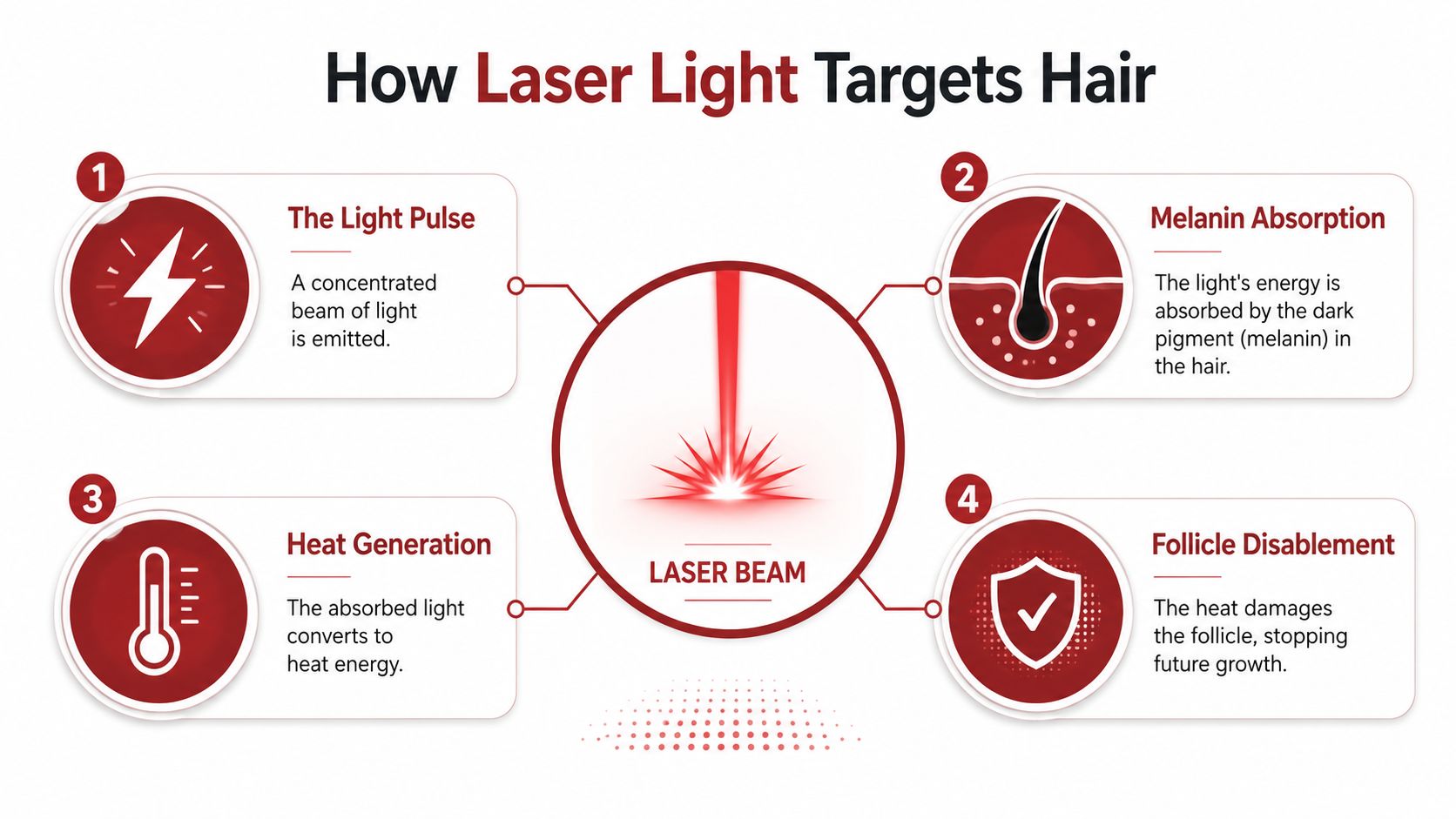
The science is straightforward once you strip away the jargon. Laser light is aimed at the melanin in the hair, the pigment that gives darker hairs their color. That light turns into heat, the heat injures the follicle, and the follicle becomes less able to produce a strong new hair in the next cycle. Mayo Clinic describes this as selective photothermolysis, and it's the reason professional treatment is built around hair growth timing, not just the number of hairs you can see today (Mayo Clinic).
Why one session never clears the lip
Only hairs in the active growth phase are vulnerable during a given visit. That's why a single appointment can reduce visible growth but can't finish the entire job. The American Academy of Dermatology says patients can expect about 10% to 25% hair reduction after the first treatment, with most needing 2 to 6 treatments spaced about 4 to 6 weeks apart, while Mayo Clinic gives a similar range of 4 to 8 treatments for best results (AAD, Mayo Clinic).
That timing matters more on the lip than on many body sites because the zone is small and the hairs are easy to notice, but the follicle cycle still isn't synchronized. One session catches one slice of the cycle, the next catches another slice, and the full plan builds from there. Clinically, that's why upper-lip results feel gradual even when each appointment itself is short.
The early evidence that helped establish these protocols came from a 1998 clinical review of the long-pulsed alexandrite laser, which reported it was safe and effective in reducing hair growth, with efficacy varying by anatomic location, pulse duration, and number of treatments. In that review, a single-pulse technique using a 10 ms pulse duration at 20 J/cm² produced the greatest hair reduction, and the authors reported no permanent adverse effects on Fitzpatrick skin types I–III at the tested parameters (PubMed). That's foundational because it shows why parameter matching, not guesswork, still drives upper-lip treatment today.
Who Is a Good Candidate for Upper Lip Laser Hair Removal
The best candidate is usually the person whose hair and skin give the laser a clear target. Darker hair on lighter skin offers stronger pigment contrast, which lets the device focus on the follicle more efficiently. That doesn't mean the treatment is limited to one skin tone, but it does mean the provider has to choose the right wavelength and settings with much more care when contrast is lower.
Hair color, skin tone, and hormonal context
Upper-lip laser hair removal tends to work best when the hair contains enough pigment for the laser to “see” it. Very light blonde, red, gray, or extremely fine hair may respond poorly because there isn't enough pigment for the beam to absorb. On the other hand, coarser or darker facial hair often responds more predictably, although hormonal drivers can still keep new hairs coming back over time.
That hormonal piece matters. Patients dealing with facial hair linked to PCOS, perimenopause, menopause, or other androgen-related patterns often do get meaningful reduction, but they should think in terms of maintenance, not a one-time permanent fix. The AAD notes that results depend on hair color, thickness, skin color, and the laser used, and that some side effects can include skin lightening or darkening, with rare herpes simplex outbreaks or scarring (AAD). Mayo Clinic also notes that hair can grow back over time and follow-up treatments may be needed (Mayo Clinic).
Clinical caution: The upper lip is one of the facial areas where I pay close attention to history of cold sores. If there's a herpes simplex history, that needs to be discussed before the first pulse goes off.
Patients with darker skin can still be candidates, but the lip demands the correct device and conservative settings. That's where wavelength selection matters, because the wrong setup can increase the chance of pigment change without improving clearance. A good consultation should cover all of that before anyone commits to a treatment plan.
What a Lip Laser Session Actually Feels Like
The first visit is usually faster than people expect. You arrive, remove any makeup or skincare from the area, put on protective eyewear, and the provider checks the skin before the handpiece touches the lip. Because the upper lip is such a small treatment zone, the actual laser portion often takes just a few minutes, even though the total appointment may run longer with prep and aftercare.
The sensation and setup
Most patients describe each pulse as a quick snap of heat, something close to a rubber-band flick, followed by a warm sting that fades fast. Cooling helps a lot here, whether it's a contact-cooling tip, chilled air, or another device-specific method, because the upper lip sits close to nerves and feels more concentrated than broader areas. That's not the same as saying it's painless, it isn't, but it's usually brief and manageable.
If the skin is reactive, topical numbing may be discussed ahead of time, though many patients don't need it for such a small zone. The key difference from larger areas is concentration. On the lip, the sensation may feel sharper per square inch even though the appointment is shorter overall.
A short upper-lip session is often easier to tolerate than people fear, but the sensitivity of the area means your provider should move deliberately, not rush through it.
After treatment, the skin may look pink or feel warm for a bit. That's common, and it's one reason aftercare matters even for a tiny area. If you're someone who also deals with inflammatory breakouts around the mouth, it helps to keep the rest of your routine simple and calm. For that reason, people who want a broader facial-skin reset sometimes pair hair removal planning with guidance like explore Neutralyze acne solutions, especially if they're trying to reduce irritation from products they've been layering on the same area.
Session Count, Timing, and the Real Result Timeline
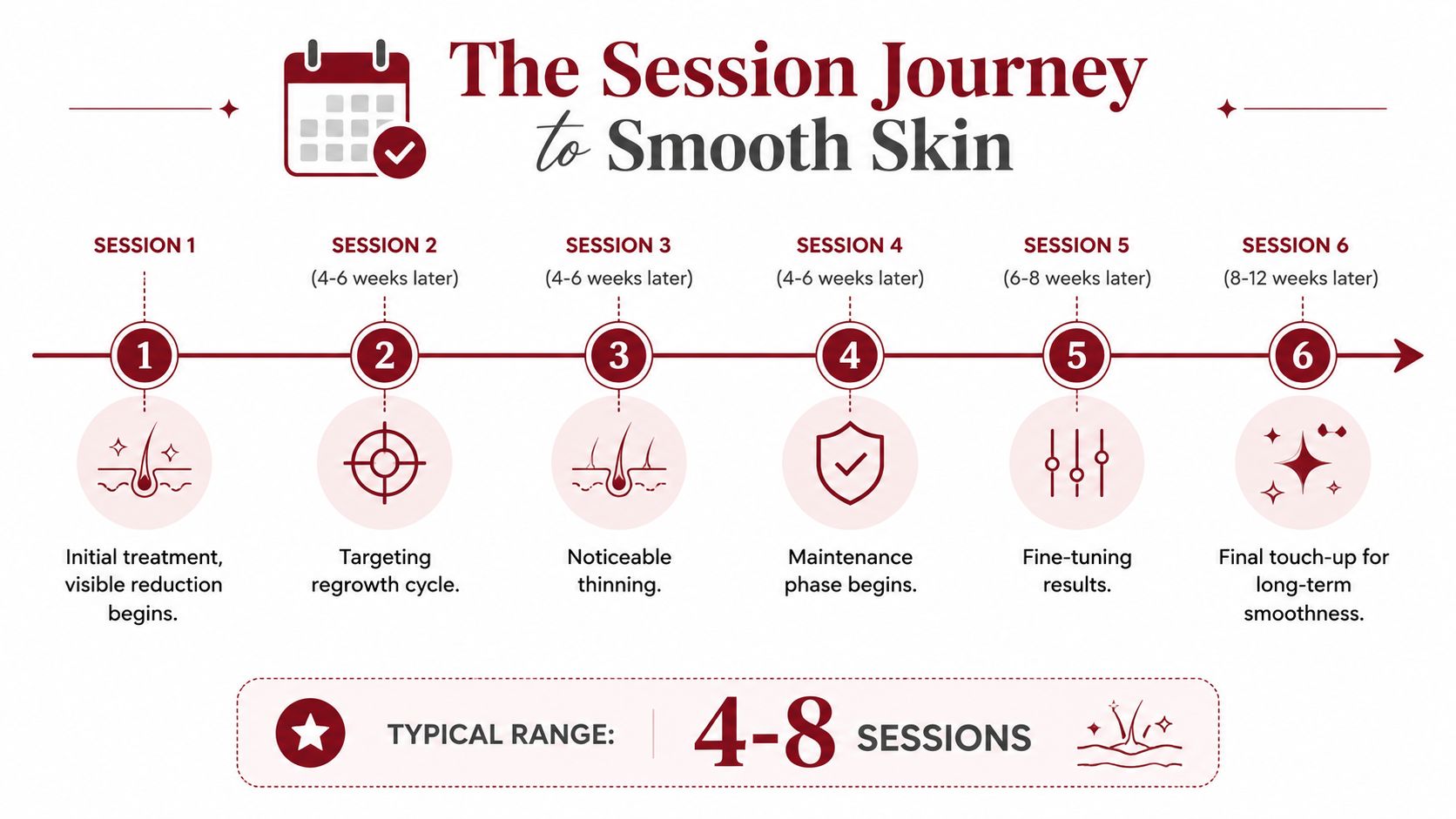
Upper-lip laser is a series, not a single appointment. The AAD says most patients need 2 to 6 treatments spaced about 4 to 6 weeks apart, while Mayo Clinic gives 4 to 8 treatments for best results (AAD, Mayo Clinic). For the lip, I usually think in terms of a gradual reduction plan with room for touch-ups, especially when hormones are part of the picture.
What the calendar usually looks like
A person who starts treatment now should expect the first change to show up as thinner, slower regrowth rather than a perfectly bare lip. That's the normal pattern. The appointment spacing is tied to the hair cycle, and facial hair often needs patience because the goal is to keep catching follicles when they re-enter the growth phase.
| Session point | What patients usually notice | What it means clinically |
|---|---|---|
| First treatments | Some visible reduction, less dense regrowth | The laser is hitting active follicles |
| Middle sessions | Finer hairs, patchier growth | More follicles are being caught in cycle |
| Later sessions | Less frequent touch-up need | The plan is shifting toward maintenance |
The American Academy of Dermatology says the first treatment often gives only 10% to 25% reduction, which is useful because it resets expectations early (AAD). The better way to think about the whole process is long-term hair reduction, not instant permanence. Mayo Clinic also notes that hair can grow back over time, which is why follow-up appointments may still be part of the plan (Mayo Clinic).
A realistic timeline for noticeable change is usually measured in months, not days. The lip is small, so each appointment is quick, but the schedule still depends on repeated visits spaced over the growth cycle. That's what separates durable reduction from a temporary cosmetic fix.
Comparing Laser to Waxing, Threading, and At-Home Devices
The upper lip is one of the worst places to choose a method based only on convenience. Waxing and threading both remove hair quickly, but they also punish thin facial skin that gets red easily and can stay irritated longer than people expect. Over time, repeated trauma around the mouth can leave the area looking rougher, not smoother.
Side by side for the upper lip
| Method | Typical lasting time | Skin irritation risk on upper lip | Best use case |
|---|---|---|---|
| Laser hair removal | Long-term reduction with maintenance | Moderate, depends on settings and skin type | People who want fewer regrowth cycles |
| Waxing | Temporary | Higher, because the skin is thin and reactive | Fast removal before an event |
| Threading | Temporary | Moderate to higher, especially with repeated friction | Small cleanup when hair is sparse |
| Depilatory cream | Temporary | Can be high if the skin reacts to chemicals | Only if the skin tolerates it well |
| At-home device | Variable, often slower | Variable, often limited by lower power | People who want a lower-intensity trial |
Professional laser is usually the better fit when the goal is less upkeep. At-home devices can seem appealing because they're convenient, but they usually work slower and less predictably on the lip, where precision matters and the treatment area is tiny. If you want a deeper look at the consumer-device side, Spa Black's guide on at-home facial hair removal products that actually work is a useful starting point, but the key limitation remains the same, home devices can't fully replace a provider who can choose wavelength and settings based on your skin.
The upper lip rewards precision more than bargain hunting. If a method keeps irritating the same area, the cost is showing up on your skin even if the price tag looks low.
Waxing and threading still have a role for some people, especially when hair is sparse or a short-term cleanup is all they need. For regular lip maintenance, though, they keep you in the same cycle of regrowth, irritation, and rebooking.
Cost, Safety, and How to Choose a Provider
Upper-lip laser is usually priced as a small facial-area service, either per session or as part of a package. The exact fee depends on the device used, the provider's experience, and the local market, but the larger issue is whether the quote reflects safe, customized treatment or a one-size-fits-all approach. The right provider should explain what laser will be used, why it fits your skin and hair profile, and whether a patch test makes sense before full treatment.
What matters more than the sticker price
The upper lip isn't the area to gamble on the cheapest option. A true med-spa setting with physician oversight gives you a better shot at matching wavelength to skin tone, which is particularly important because the lip is small, visible, and unforgiving if settings are off. Spa Black in San Antonio is one option that offers laser hair removal under physician oversight, with two locations and a device portfolio broad enough to match treatment to different skin and hair patterns.
Good provider rule: If the consultation feels rushed, walk away. The lip deserves a skin check, a candid discussion of candidacy, and a plan for aftercare before the first session.
The consultation should also cover safety basics, including history of cold sores, recent sun exposure, and whether your skin has been reacting to other facial treatments. The lower the area sits on the face, the more visible even temporary redness can be, so I want patients to know what's normal and what isn't before they leave the office. Mayo Clinic and the AAD both note that side effects can include pigment change, rare scarring, and other complications, which is why careful settings and screening matter (AAD, Mayo Clinic).
A good consultation should leave you with three answers, whether you treat immediately or not. Can this laser target your hair type? How many visits are likely? What does the maintenance plan look like if hormonal regrowth shows up later?
Your First Step at Spa Black in San Antonio
The upper lip usually does best when it's treated as a maintenance area, not a one-time project. That mindset helps people tolerate the timeline, plan for touch-ups, and avoid disappointment when a few hairs come back between sessions. For anyone ready to start, Spa Black's initial consultation guide at the laser hair removal initial consultation, a no-nonsense guide is the right place to see how the visit is structured before you book.
At Spa Black in San Antonio, a provider can look at your skin tone, hair color, growth pattern, and any hormonal context that may affect the lip over time. The practice has two locations and online booking, so the next step is simple, schedule a consultation and get a plan that fits your face instead of guessing your way through another round of waxing or tweezing.
If you're ready to stop managing the same upper-lip hairs every week, Spa Black can map out a laser hair removal plan built around your skin and your goals. Visit Spa Black to book a consultation, compare your treatment options, and get a realistic plan for lasting upper-lip reduction with provider guidance from start to finish.